

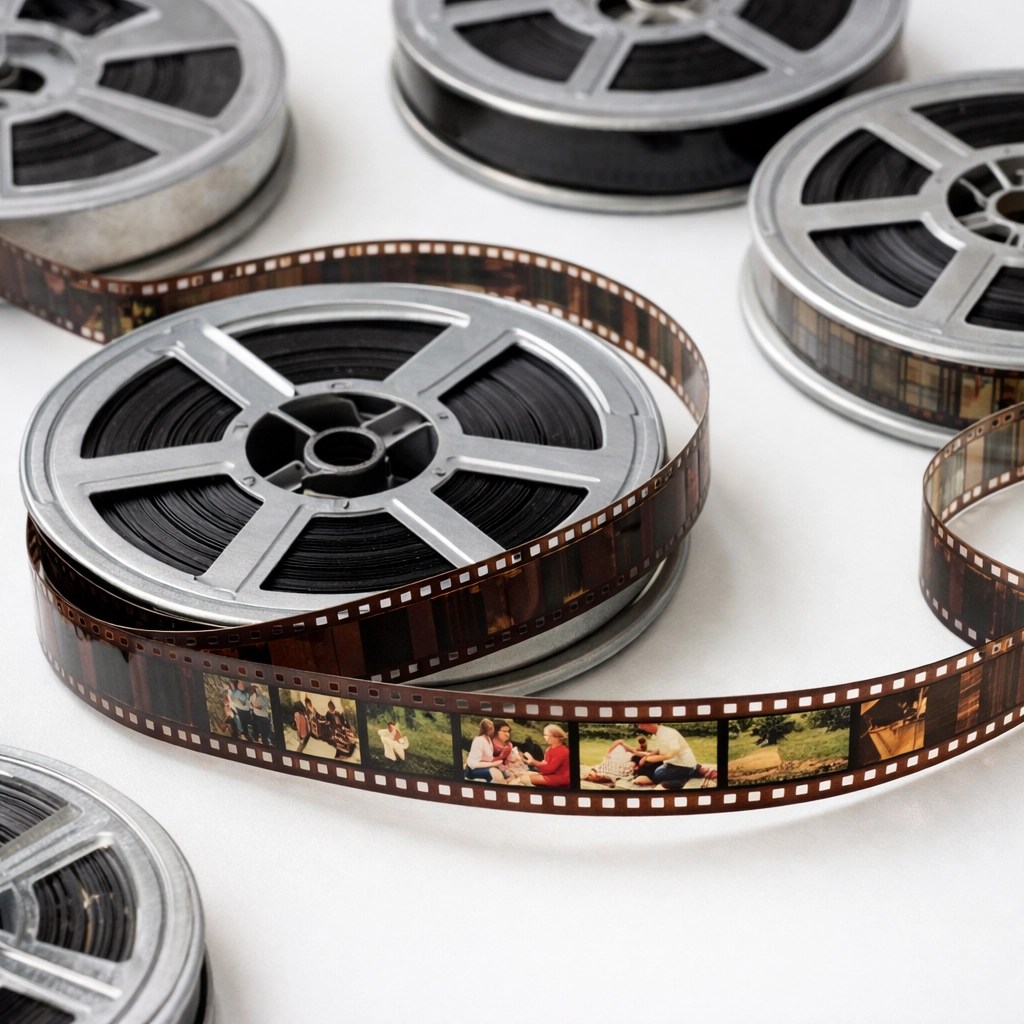
For many families, the attic or the back of a closet holds a treasure trove of history captured on small, silent reels. Whether it is 8mm or Super 8, these films contain the only moving records of grandparents’ weddings, a child’s first steps, or long-lost holiday gatherings. However, as the years pass, the equipment needed to view these memories: the vintage projector: becomes increasingly rare and prone to failure.
When the realization hits that these films need to be preserved, most people face a choice. On one hand, there is the DIY route: setting up an old projector, pointing a modern smartphone or camcorder at the screen, and hitting record. On the other hand, there is the professional approach: using specialized 8mm transfer services to create a high-definition digital file.
While the DIY method might seem like a quick and cost-effective fix, the difference in quality between a projector recording and a professional 8mm film transfer service is vast. To help you decide how to best preserve your family legacy, let’s look at the technical and visual hurdles of the DIY method compared to the professional standards we maintain at Scan A Lot, LLC.
The DIY Temptation: Recording a Projector Screen
It is a common scenario. You find a working projector at an estate sale or tucked away in a box, and you think, "I can just film this with my iPhone." On the surface, it sounds simple. You project the image onto a white wall or a beaded screen, set your camera on a tripod, and capture the footage.
However, film and digital sensors do not speak the same language. When you attempt to bridge the gap between a mechanical projector from the 1960s and a digital sensor from the 2020s by simply "filming the air," several physical and optical issues arise that can significantly degrade the quality of your memories.

1. The Problem with Flickering
One of the most immediate issues with DIY projector recording is the "flicker" effect. Movie film typically runs at 16 or 18 frames per second (fps). Modern digital cameras and smartphones usually record at 30 or 60 fps. Because the shutter speeds of the two devices are not synchronized, the camera captures the moments when the projector's shutter is closed or transitioning between frames.
The result is a distracting, rhythmic strobing or flickering in the final video. This isn't just a minor annoyance; it can make the footage difficult to watch and can even cause eye strain. Professional 8mm transfer services eliminate this by using frame-by-frame scanning, where the digital sensor waits for each individual frame of film to be perfectly positioned before capturing it.
2. The "Hot Spot" and Vignetting
Projectors use a high-intensity lamp to push light through the film and onto a screen. Because of the way lenses work, this light is almost always most intense in the center of the image. When you look at a projected image with your eyes, your brain compensates for this uneven lighting. However, a digital camera is much less forgiving.
DIY recordings often suffer from a "hot spot": a bright, washed-out circle in the middle of the frame: while the corners of the image appear dark (a phenomenon known as vignetting). This leads to a loss of detail in the most important part of the frame. In a professional scan, the light source is diffused and calibrated to ensure even illumination across the entire frame, from corner to corner.
3. Washed-Out Colors and Lack of Clarity
Filming a screen involves recording light that has already reflected off a surface. This introduces "ambient interference." Any bit of light in the room, the texture of the screen, or even dust in the air between the projector and the wall will soften the image and wash out the colors.
When you use a professional 8mm film transfer service, the film is scanned directly at the source. There is no screen, no reflected light, and no room for the colors to fade into the background. This direct-to-sensor method preserves the vibrant saturations and deep blacks that 8mm film is known for.
Why Professional Transfer is the Better Choice
At Scan A Lot, LLC, we believe that your family memories deserve more than a "good enough" recording. When people search for digitalization near me, they are looking for a way to bring the past into the present with the highest possible fidelity.
Our professional transfer process is designed to overcome every hurdle associated with DIY methods. Here is how we ensure your films look better than they ever did on a dusty old projector.
Frame-by-Frame Scanning
Unlike a camcorder recording a moving image, our equipment performs a frame-by-frame scan. Each individual frame of your 8mm or Super 8 film is treated as a high-resolution photograph. These images are then compiled into a digital video file. This process ensures 100% flicker-free playback and allows for a level of sharpness that a projector recording simply cannot match. You can learn more about our specific film processes on our 8mm film transfer page.
Accurate Color Balance and Restoration
Old film often undergoes color shifting over the decades. You may notice your old movies looking overly red, blue, or yellow. During a professional transfer, we can apply color correction to help bring back the natural skin tones and vibrant landscapes of the original moment. A DIY recording will only capture the faded colors exactly as they appear on the screen, often making them look even thinner and more "ghostly."
Handling Fragile Media
Old film is brittle. Projectors are notorious for "eating" film: tearing sprocket holes or snapping the reel entirely if the tension isn't perfect. Professional scanners are designed with "cool" LED light sources and gentle transport mechanisms that protect the film. If you are worried about the state of your media, it is always safer to trust it to professionals who understand the delicate nature of analog media.

Cost vs. Value: A Long-Term Perspective
It is true that recording your own screen is free (assuming you have the equipment). However, if the goal is to preserve these memories for the next fifty years, the "free" method often proves to be the most expensive in terms of lost quality. Once a film is projected and recorded poorly, and the original film continues to degrade, that low-quality digital file becomes the "new" original.
By choosing professional 8mm transfer services, you are making a one-time investment in a high-resolution digital master. These files can be easily backed up, shared with family members across the globe, and even edited into new projects. We often provide these files on a flash drive for easy access on modern computers and smart TVs.
The Scan A Lot Difference
We understand that these reels aren't just "media": they are your family history. Whether it’s a standard 8mm reel from the 1950s or a Super 8 sound film from the 70s, our goal is to provide a seamless, professional experience.
We serve a wide variety of needs, from individual families to corporate media digitization. Our clients trust us because we treat every reel as if it were our own. You can read more about the experiences of those who have trusted us with their memories on our testimonial page.
Digitalization Near Me: Finding the Right Partner
When searching for digitalization near me, it is important to look for a provider that uses modern, frame-by-frame equipment rather than older "telecine" methods which can still produce some of the same issues as DIY recording. At Scan A Lot, LLC, we stay updated on the best practices in the industry to ensure your photo and slide scanning and film transfers are world-class.

Final Thoughts
The nostalgia of the clicking projector is a wonderful thing, but the reality of projector recording is often a disappointment. Blurry images, distracting flickers, and washed-out colors do not do justice to the people and places captured on those reels.
Your memories deserve to be seen in the highest clarity possible. Professional scanning unlocks the detail hidden in the grain of the film, revealing faces and backgrounds that you might have missed when watching on a screen years ago.
Don't settle for a blurry recording of a projector screen. Get the high-quality digital memories your family deserves with our 8mm transfer services. Visit scanalot.photos to start your preservation.
If you have questions about your specific film type or the condition of your reels, feel free to check our frequently asked questions or contact us directly. We are here to help you move your past into the future.
#8mmFilm #FilmTransfer #ProjectorVsDigital #Super8 #Memories #ScanALot #DigitalizationNearMe #FilmScanning #FamilyHistory #HomeMovies #Preservation #TipsAndTricks
Ready to preserve your own memories? Scan A Lot has been digitizing photos, slides, film, video and audio for Long Island families since 2006 — everything handled in our own West Hempstead lab, never shipped out.
Start with 8mm film transfer, or browse video, photos and slides, 8mm film and audio. Questions? Contact us or call 844-SCAN-PIX.