

Categories: Tips & Tricks, Preservation
Let’s take a quick trip back to the 80s and 90s. Remember the feeling of holding a pencil and winding the loose tape back into a plastic shell? Remember the precise art of waiting for the radio DJ to stop talking so you could hit "Record" and "Pause" at the exact right moment to capture your favorite song?
Mix tapes weren't just collections of music; they were time capsules. They were high school romances, road trip soundtracks, and the only way we could take our music on the go before the world went digital. But here’s the cold, hard truth: those tapes were never meant to last forever. If you’ve got a shoebox full of cassettes sitting in your attic or garage, you aren't just holding onto memories, you’re holding onto a ticking clock.
At Scan A Lot, LLC, we see it all the time. People bring in these precious relics hoping to hear a grandmother’s voice or a long-lost garage band demo, only to find that the tape has degraded beyond repair. If you’re wondering if your mix tape is still any good, the answer is "maybe", but it won't stay that way for long. That’s where a professional audio cassette to digital service comes in.
The Science of the "Slow Fade"
Audio cassettes rely on a thin strip of polyester coated with magnetic particles. Over time, that magnetic coating starts to lose its grip. Scientists and archivists call this "remnance loss." Essentially, the magnetic signal that holds your music or voice recordings literally evaporates into the air over the course of 10 to 20 years.
Even worse than the magnetic fade is the physical breakdown of the tape itself. In humid environments (like a typical East Coast basement or attic), the binder that holds the magnetic particles to the plastic can become "sticky." When you try to play a sticky tape, it creates friction, squeals, or even snaps entirely.

Why DIY Usually Ends in Disaster: The "Wow and Flutter" Problem
A lot of people think, "Hey, I can do this myself. I’ll just buy one of those $30 USB cassette converters from a big-box website and plug it into my laptop."
While we love the DIY spirit, this is usually where things go south. Cheap, consumer-grade plastic converters are notorious for poor motor stability. When you transfer audio cassette to digital using low-end equipment, you encounter two major issues: "Wow" and "Flutter."
Wow refers to long-term speed variations. It’s that "seasick" feeling where the pitch of the music or voice seems to rise and fall slowly. It makes a piano ballad sound like it’s being played underwater.
Flutter refers to much faster speed variations. This creates a "burring" or "quivering" sound that distorts the clarity of the recording.
These issues happen because cheap motors can’t maintain a consistent speed, and old tapes have high friction that these tiny motors can't overcome. When you use a professional audio cassette to digital service, we use professional broadcast-grade equipment with heavy-duty motors and sophisticated "capstan" systems that stabilize the tape as it moves. We ensure the speed is dead-on, so your favorite songs sound exactly like they did in 1988: not like a warped record.
How the Scan A Lot Process Works
When you trust us with your tapes, we don’t just "press play." Our process is designed to treat your media with the respect it deserves.
- Inspection: First, we check the physical health of the tape. We look for mold, snapped ribbons, or broken shells. If the shell is cracked, we can often transplant the tape into a fresh "donor" shell to ensure it plays smoothly.
- Cleaning: We ensure the tape path is clear of dust and debris that could scratch the delicate magnetic surface.
- The Transfer: We use high-end, calibrated decks to capture the audio. This isn't a "one-size-fits-all" deal. We adjust the "azimuth" (the angle of the playback head) to perfectly match how your tape was originally recorded. This ensures the highest possible frequency response: meaning you get the crisp highs and deep lows that DIY converters often miss.
- Digital Mastery: Once the audio is in our system, we can perform basic noise reduction to remove that classic "tape hiss" without destroying the warmth of the original recording.
- Delivery: We provide your files in high-quality formats, usually delivered via a flash drive or digital download, so you can listen on your phone, computer, or smart speakers.

It’s Not Just About the Music
While we love a good 80s hair metal mix, the most important tapes we handle are the personal ones. We’ve processed tapes of children’s first words, recordings of ancestors telling stories about "the old country," and even old phone machine messages that are the only remaining record of a loved one's voice.
Sound is incredibly tied to memory. Hearing the specific cadence of a parent's laugh or the background noise of a childhood home can bring back memories that photos alone can't touch. But because audio cassettes are so fragile, these "audio ghosts" are the first things to disappear if they aren't preserved.
If you have these types of recordings, you can learn more about our specific audio transfer capabilities and how we handle sensitive family archives.
The Convenience of Going Digital
Let’s be real: when was the last time you actually had a working tape deck in your living room? Most cars don’t even have CD players anymore, let alone cassette slots. By choosing to transfer audio cassette to digital, you’re making your memories accessible again.
Imagine being able to text a "mix tape" to your old college roommate. Or playing your parents' wedding vows through the Bluetooth speakers at their 50th-anniversary party. Digital files don't degrade. Once they are converted, you can back them up to the cloud, copy them to multiple drives, and ensure they stay in the family for generations.

Don't Wait for the Snap
We often get calls from folks who tried to play an old tape at home, only for the deck to "eat" it. When a tape gets tangled in the rollers of an old, unmaintained player, it can stretch or snap. While we can sometimes repair these (check our frequently asked questions for more on repairs), it’s always better to transfer the tape before an accident happens.
The plastic in the cassette shells becomes brittle over time. The foam pressure pads inside the tape often crumble into dust. If that dust gets into the magnetic ribbon, it can cause dropouts in the audio that can't be fixed.

Ready to Save Your Sound?
Whether you have a single tape of a long-lost demo or a whole crate of personal history, Scan A Lot, LLC is here to help. We pride ourselves on being a professional audio cassette to digital service that treats every tape like it’s the only copy in existence: because usually, it is.
You can check out our audio cassette to digital transfer page for pricing and details, or if you have a larger collection (like for a museum or a corporate project), feel free to reach out to us directly.
Your mix tapes were the soundtrack of your life. Don't let them fade into silence. Let's get them digitized so you can hit "Play" one more time.
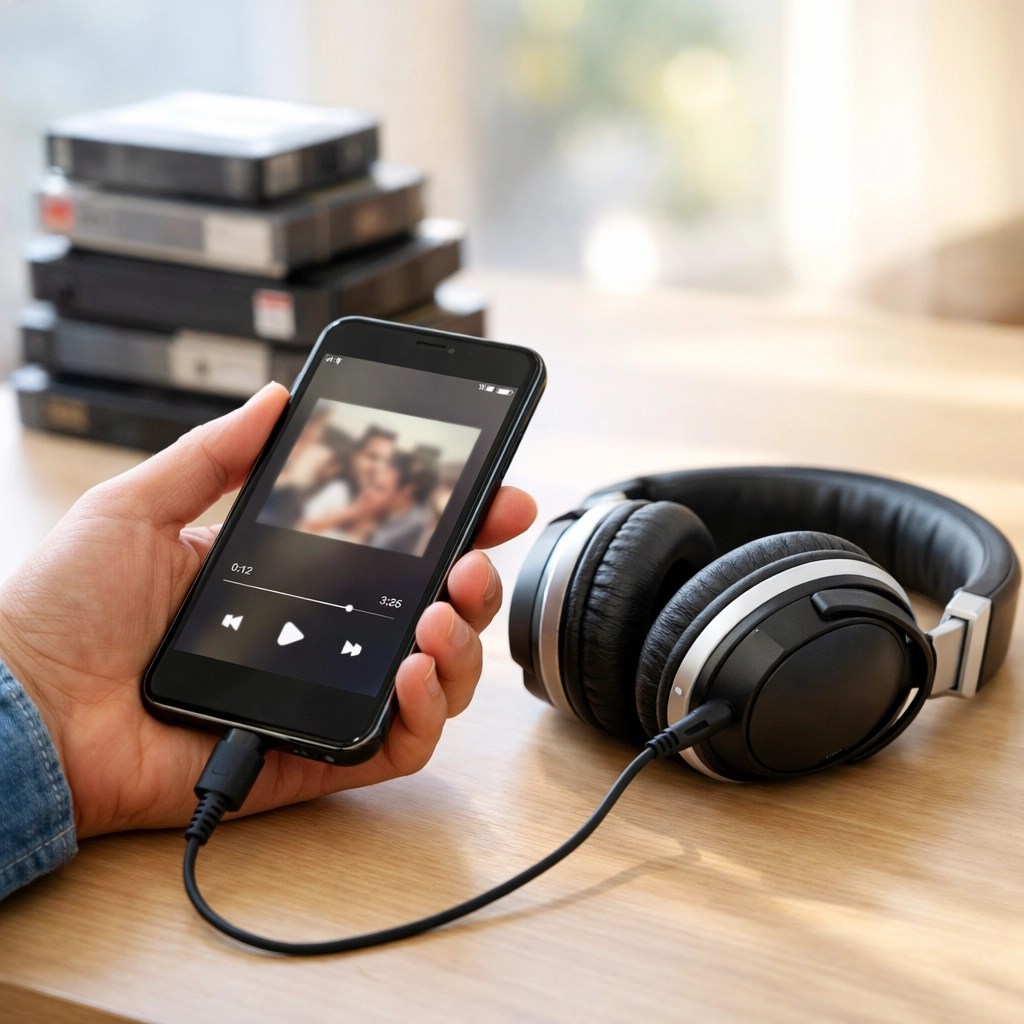
If you're also sitting on a pile of old home movies, don't forget that those are on a clock, too. You can read more about why your VHS tapes aren't immortal on our blog.
Stop by our contact page today to start your preservation journey. We can't wait to hear what you've got!
#AudioTransfer #CassetteToDigital #ScanALot #Preservation #MixTapeNostalgia #AudioCassetteToDigitalService #SaveYourMemories #DigitalConversion #AnalogToDigital #80sNostalgia #90sNostalgia #AudioRestoration
Ready to preserve your own memories? Scan A Lot has been digitizing photos, slides, film, video and audio for Long Island families since 2006 — everything handled in our own West Hempstead lab, never shipped out.
Start with audio cassette digitization, or browse video, photos and slides, 8mm film and audio. Questions? Contact us or call 844-SCAN-PIX.