

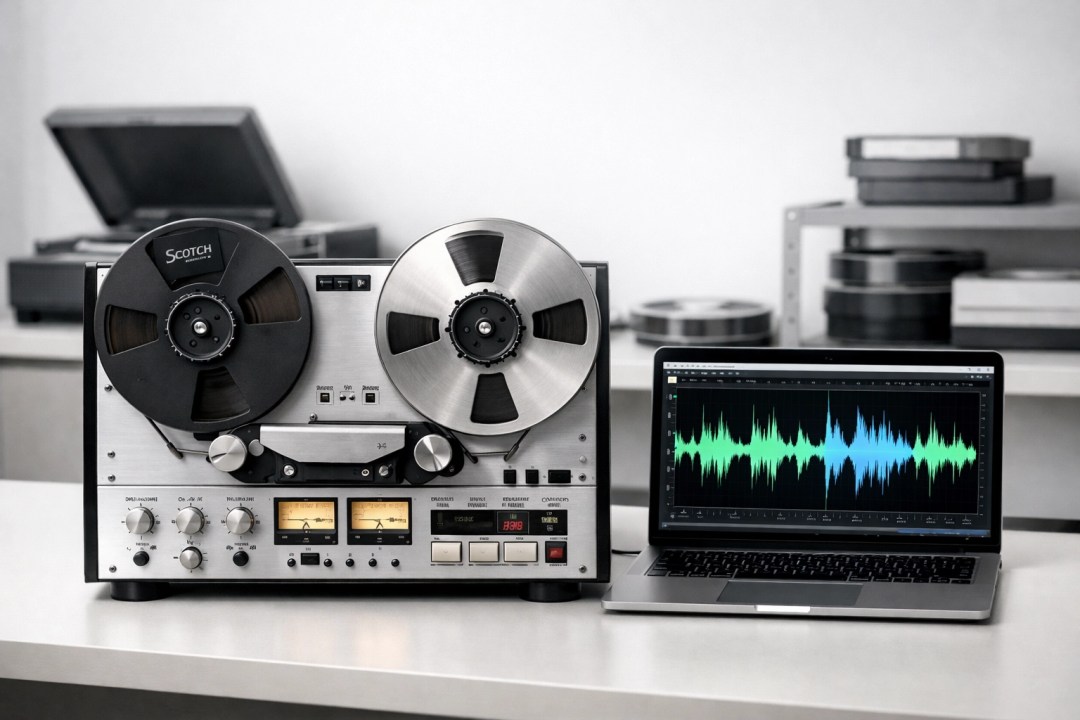
There’s a specific kind of magic that happens when you’re rummaging through old boxes in the attic or the back of a hallway closet. Between the dusty holiday decorations and the high school yearbooks, you stumble upon a box of tapes. Some are the familiar, rectangular plastic audio cassettes we all remember from the 80s and 90s. Others might look like large, open wheels of brown plastic ribbon, these are the reel-to-reel tapes, the ancestors of our modern recording tech.
For many of us, these aren't just pieces of plastic; they are time capsules. They hold the sounds of a grandfather’s laugh, a mother’s lullaby, or perhaps a long-forgotten interview with a relative who is no longer with us. But here’s the reality: magnetic tape wasn’t meant to last forever. If you’ve found these "hidden gems," the clock is ticking on how long they’ll remain playable.
At Scan A Lot, LLC, we believe that preserving these voices is one of the most important things you can do for your family history. Let’s dive into how to identify what you have and why high-fidelity digitization is the only way to ensure those stories aren't lost to time.
Identifying Your Audio Treasures
Before you can save the sound, you need to know what you’re looking at. Most attic finds fall into two categories: Reel-to-Reel and Audio Cassettes.
The Reel-to-Reel (Open Reel)
These look like movie film but thinner and brown. They come in various sizes, usually 3, 5, or 7 inches in diameter. These were common from the 1950s through the 1970s. Because they were often used for home "voice letters" or high-quality music recordings, they frequently contain some of the most precious, unedited family moments.
Identifying the speed is the tricky part. Reel-to-reel tapes were recorded at different speeds (measured in inches per second, or IPS). Most home recordings are 3 3/4 or 7 1/2 IPS. If you try to play these back on a consumer-grade machine that isn't calibrated correctly, you might get a "chipmunk" voice or a slow, ghostly drone. This is why professional equipment is so vital.
The Standard Audio Cassette
The "Compact Cassette" took the world by storm in the late 60s and dominated until the CD era. You likely have stacks of these. While they seem sturdy, the tape inside is incredibly thin and prone to "stretching" or snapping. If you notice your tapes making a strange sound, it might be a sign of internal friction. We've actually written about why your old cassettes are shaking and what it means for the health of your recordings.

Why High-Fidelity Digitization Matters
It’s tempting to buy a $20 "cassette-to-MP3" converter from a big-box retailer and try to do it yourself. However, when it comes to preserving rare voices and one-of-a-kind stories, "good enough" usually isn't.
High-fidelity digitization isn't just about making the file loud; it’s about capturing the full dynamic range of the original recording. When we digitize audio, we use professional broadcast-grade equipment that stabilizes the playback. Cheap converters often introduce "wow and flutter": that warbling sound that makes music and voices sound distorted.
By using professional services, you ensure:
- Signal Clarity: We use high-end analog-to-digital converters to ensure every nuance of a voice is captured.
- Noise Reduction: We can gently remove the "hiss" and background hum that often plagues old magnetic tapes without stripping away the character of the voice.
- Speed Accuracy: We ensure the playback speed matches the original recording exactly, so Grandma actually sounds like Grandma.
If you are curious about the technical side, you can learn more about the easiest way to preserve your favorite cassettes through our professional process.
The Emotional Resonance: Hearing a Loved One Again
The most powerful reason to look for "digitization near me" isn't the technology: it’s the emotional impact. Sound is uniquely tied to our memory. While a photo shows you what someone looked like, a recording reminds you of how they felt.
For many of our clients, hearing the voice of a parent or grandparent after twenty or thirty years is an overwhelming experience. It’s like they are back in the room with you. This is especially true for families dealing with memory loss or aging.
Reminiscence Therapy and Connection
In the world of dementia and Alzheimer’s care, there is a practice called Reminiscence Therapy. It involves using sensory cues: like photos, videos, and sounds: to help seniors tap into long-term memories. Sound is one of the strongest triggers. Hearing a familiar voice or a song from their youth can reduce anxiety and foster a deep sense of connection.
We’ve seen firsthand how audio cassette to digital services help seniors with dementia. It’s not just about the past; it’s about providing comfort in the present. If you want to dive deeper into how this works, we have a guide on using reminiscence therapy at home as a tool for connection.

The "Near Me" Advantage: Trust and Safety
When you search for "digitization near me," you’re looking for more than just a service; you’re looking for a neighbor you can trust with your only copy of a memory. Shipping your one-of-a-kind reel-to-reel tapes across the country can be nerve-wracking. Tapes can get lost, damaged by heat in a delivery truck, or mismanaged by large-scale "factories" that treat your memories like widgets on an assembly line.
Working with a local specialist like Scan A Lot, LLC means your media stays safe. We understand the fragility of these formats. For example, old tapes can become brittle. If you try to play a 40-year-old tape without inspecting it, it can snap or "shed" its magnetic coating. We know how to safely transfer audio cassettes before the tape snaps, ensuring your memories are preserved, not destroyed.
Why Choose Scan A Lot, LLC?
We know you have choices when it comes to your media conversion. Here is why Steve and the team at Scan A Lot are the right fit for your attic finds:
- Professional Care: We use high-definition, professional equipment to capture every second of your audio.
- Customization: We don't just hand you a file. We remove blank spaces, trim the ends, and can even help with custom file naming.
- Local Accountability: We are right here. You can talk to us, ask questions, and know exactly who is handling your tapes.
- Comprehensive Service: Whether it’s audio, photos, or 8mm film, we treat every project with the same level of professional respect.
Don't Wait Until the Sound Fades
Magnetic tape has a shelf life. Between "sticky shed syndrome" (where the tape binder breaks down) and simple environmental decay, these recordings are literally disappearing every day. The best time to digitize was ten years ago; the second best time is today.
Once your audio is digitized, you have to decide where to keep it. Many of our clients ask about the best storage methods. We’ve put together a comparison on cloud storage vs. flash drives to help you decide what’s best for your family’s digital archive.
Conclusion
Those hidden gems in your attic are more than just old technology: they are the voices of your history. Whether it’s a reel-to-reel of your parents’ wedding or an audio cassette of you telling stories as a child, these recordings deserve a life beyond the cardboard box.
If you’re ready to hear those voices again, search for "digitization near me" and let’s get those tapes off the shelf and into your ears. At Scan A Lot, LLC, we’re honored to help you find and save the sounds that matter most.

#AudioDigitization #ReelToReel #AudioCassetteToDigital #ScanALot #PreserveMemories #FamilyHistory #ReminiscenceTherapy #DementiaCare #MemoryLossSupport #VintageAudio #AudioRestoration #DigitalArchiving #MediaConversion #LocalBusiness #SteveMelnick #AtticFinds #HiddenGems #SoundOfMemories #AudioTransferService #DigitizationNearMe #PreservationMatters #SaveYourTapes #VoiceRecordings #FamilyLegacy #AnalogToDigital #HighFidelity #SoundPreservation
Ready to preserve your own memories? Scan A Lot has been digitizing photos, slides, film, video and audio for Long Island families since 2006 — everything handled in our own West Hempstead lab, never shipped out.
Start with audio cassette digitization, or browse video, photos and slides, 8mm film and audio. Questions? Contact us or call 844-SCAN-PIX.