

There is something special about watching an old wedding reel with the people who remember the day best.
A small 8mm film reel may hold only a few minutes of footage, but those minutes can include a lifetime of meaning: Mom walking down the aisle, Dad greeting relatives, grandparents who are no longer here, a familiar church, a first dance, or a reception filled with faces that younger family members have only seen in photographs.
When that reel is transferred to a digital file, the experience becomes easier to share. Instead of gathering around an aging projector, the family can watch together on a television, computer, or mobile device. More importantly, the story held inside the film becomes accessible to the next generation.
Why wedding reels deserve special care
Wedding films are often among the most meaningful items in a family collection. Unlike a single photograph, a film reel captures movement, expressions, clothing, decorations, and the atmosphere of the day.
You may see the way a parent smiled before the ceremony, how relatives greeted one another, or how a child moved through the reception. These small details can bring back memories that had become difficult to describe.
Many families also discover that their wedding reels are not labeled clearly. A box may simply say “Wedding” or include a date without identifying everyone in the footage. Watching the film again can help relatives recognize people and places while those memories are still easy to identify.
That makes an 8mm transfer more than a format change. It can become an opportunity for relatives to record names, stories, and family history together.

What makes 8mm film transfer different?
8mm and Super 8 film are made up of a sequence of individual frames. During a professional transfer, those frames can be captured individually with high-definition film scanning equipment and assembled into a digital video.
This frame-by-frame approach helps preserve the detail and motion contained in the original film. It also gives the transfer process greater control over the way the footage is presented, including color, exposure, and playback speed.
Older projector-and-camera methods can produce uneven results, including flicker, blur, or distortion. For an irreplaceable wedding reel, families often prefer a process designed to capture each image carefully rather than simply pointing a camera at a projected image.
At Scan A Lot, our 8mm film transfer service uses true frame-by-frame scanning for 8mm and Super 8 film. The finished files are provided in a format that is convenient for viewing and sharing, while the original reels are returned to the customer.
What a professional transfer may include
Every film collection is different. Some reels are short and in good condition, while others have been stored for decades and may need additional inspection before transfer.
A professional process generally includes:
- Reviewing the reel before scanning: The film is checked for its format, condition, splices, and any visible concerns.
- Frame-by-frame capture: Each frame is scanned individually to create a digital sequence.
- Color and image adjustments: The footage may be adjusted to create a more natural and watchable result while retaining the character of the original film.
- Sound capture when available: Some Super 8 films include magnetic sound. If the soundtrack is present and suitable for transfer, it may be captured and synchronized with the image.
- Digital delivery: Finished files can be supplied for viewing, saving, and sharing on current devices.
- Return of original materials: The original film remains an important part of the family archive and is returned with the digital copies.
Scan A Lot’s service page notes that typical turnaround is about two to three weeks, depending on the volume and condition of the films. If your reels are especially old, damaged, or part of a larger collection, it is helpful to discuss expectations before the work begins.
Before sending in a family wedding reel
You do not need to know every technical detail before asking about a transfer. A few pieces of information can help a service understand what you have:
- The label or date written on the reel or box
- Whether the film is marked 8mm or Super 8
- The approximate number of reels
- Whether sound may be present
- Any important people, events, or sections you hope to see
- Whether you would like files for home viewing, sharing, or long-term storage
If the reel has sentimental value, mention that when arranging the service. Knowing the story behind the material can make the project more personal and helps set clear expectations.
It is also useful to keep the original reel and its box together. Even after digitization, the physical film is part of the family’s history. The digital copy makes the memories easier to access, but the original remains a meaningful archival object.
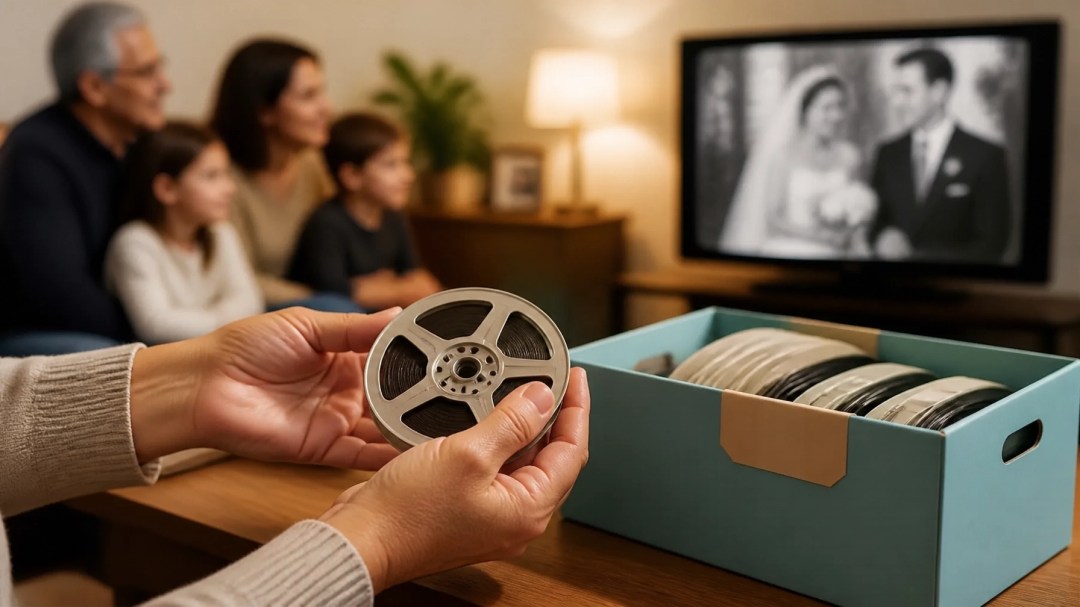
Turning a transfer into a family gathering
The first viewing does not have to be a formal event. It may happen during a holiday visit, a birthday, or a quiet afternoon when family members have time to sit together.
Older relatives may remember details that are not visible on screen. They can explain who attended, where the ceremony took place, or what was happening just outside the camera’s view. Younger relatives may notice details they have never seen before.
Consider inviting family members to share memories while watching. Someone can write down names and stories, or record a short audio conversation afterward. The film then becomes part of a larger family archive that includes context, voices, and personal recollections.
Digital files also make it easier to share the same memory with relatives who live elsewhere. A copy can be saved for children, grandchildren, or family members who could not attend the viewing in person.
Protecting the digital copy
Once your wedding film has been digitized, keep the highest-quality version as your master file. You can make smaller copies for phones, email, or social media, but try to preserve the original digital file separately.
A simple preservation plan may include:
- One copy on a computer or external drive
- A second copy stored in another location
- A cloud copy or other off-site backup
- Clear file names that include the family name, event, and approximate date
It is also wise to keep the original film in a cool, dry, dark location. The Library of Congress offers additional guidance on caring for motion picture film.
Digital storage also needs occasional attention. Drives can fail, file formats can change, and passwords can be forgotten. Reviewing your family archive every few years gives you an opportunity to confirm that the files still open and that more than one copy exists.
Preserving more than the wedding day
A wedding reel is often one part of a larger collection. The same family may also have printed wedding photographs, slides from the honeymoon, VHS recordings of anniversaries, or audio tapes containing speeches and conversations.
Digitizing these formats together can create a more complete record of the family story. Scan A Lot also provides photo and slide scanning, video tape transfers, and audio cassette digitization.
A photograph can show what the wedding looked like. A film can show how people moved and interacted. An audio recording can preserve a voice that the family has not heard in years. Each format contributes something different.
Giving the old reel a new place in the family story
The most rewarding moment may not be when the digital file arrives. It may be the evening when everyone sits together and the room becomes quiet as the first images appear.
Someone recognizes the bride’s dress. Someone else remembers the band. A grandchild sees a great-grandparent moving through the reception for the first time. A familiar face appears on screen, and a story begins.
That is the lasting value of an 8mm film transfer. It does not replace the original memory. It gives the family a practical way to revisit, discuss, and share it.
If you have a wedding reel waiting in a closet or storage box, contact Scan A Lot to discuss the format, condition, and options for preserving it. Whether you are nearby or using our mail-in digitization service, we handle family films with care and return the original materials along with the digital copies.
Categories: Tips & Tricks · Preservation
#8mmFilmTransfer #Super8Film #FilmDigitization #WeddingMemories #FamilyHistory #MemoryPreservation #HomeMovies #FamilyArchives #DigitalPreservation #PreserveYourMemories #VintageFilm #WeddingFilm #8mmToDigital #Super8ToDigital #FamilyLegacy #GenerationalMemories #MediaConversion #FilmScanning #MemoryKeeping #LongIslandFamilies #ScanALot