

For many families, 8mm and Super 8 films are more than old reels. They may hold a child’s first steps, a wedding, a holiday gathering, or everyday moments that were captured decades ago and have not been viewed in years.
An 8mm film transfer makes those memories easier to watch, share, and preserve. Instead of relying on an aging projector, a professional transfer creates modern digital files from the original film while giving the reels careful, specialized attention.
If you are considering professional 8mm or Super 8 digitization, here is what you can generally expect from the process, the final results, and the experience of working with a media preservation service.
What Is an 8mm Film Transfer?
An 8mm film transfer converts motion-picture film into a digital video format. Super 8 is a related film format that became popular for home movies because it offered a larger image area and a simpler cartridge design than standard 8mm.
The original film is inspected and prepared before it is scanned. A professional film scanner then captures the images on the reel, often frame by frame, and assembles those individual images into a watchable digital video.
The goal is not to change the character of your home movies. It is to preserve the original content in a format that is more convenient to view on current televisions, computers, phones, and tablets.
1. Your Reels Are Inspected Before Scanning
A professional service begins by identifying the film format and examining the condition of each reel. This helps determine how the film should be handled and whether any special attention may be needed before scanning.
Technicians may look for:
- Loose or damaged film
- Weak or broken splices
- Missing leaders
- Dust and surface debris
- Shrinkage or brittleness
- Fading, color shifts, or exposure changes
- Reels that may need to be separated or organized
This inspection is an important part of setting realistic expectations. Film can vary significantly from reel to reel, even when all of it came from the same camera or family collection.
At Scan A Lot, original media is handled with care, logged, and returned with the completed digital files. If you have questions about the condition of your reels, you can review the company’s media digitization questions and answers before getting started.

2. Cleaning and Preparation Help Improve the Scan
Decades of storage can leave film with dust or other surface debris. Before scanning, a professional may clean the film and check that it can move safely through the equipment.
If a splice is weak or a section of leader has deteriorated, it may need attention before the transfer begins. Proper preparation helps protect the film during handling and can reduce visible distractions in the finished video.
Cleaning cannot reverse every form of aging. It also cannot recreate image information that was never captured or has been permanently lost. However, careful preparation can help the scanner capture the best result the original film can provide.
This is one reason professional film transfer is different from simply projecting a reel and recording the image with a consumer camera. The film itself receives attention before the digital capture starts.
3. Frame-by-Frame Scanning Captures the Original Images
The scanning method has a major effect on the quality of an 8mm film transfer.
With frame-by-frame scanning, the film’s individual images are captured carefully and then assembled into a digital video. This approach is designed to preserve more of the detail, color, and movement present in the original film than a basic projection-and-recording method.
Scan A Lot describes its workflow as using dedicated film scanners that photograph each frame individually. The company also uses professional equipment selected for the type of media being handled.

The final appearance will still reflect the original film. A reel that was underexposed, faded, or out of focus will retain some of those characteristics. Professional scanning does not turn an old home movie into newly shot modern footage. Instead, it gives the original the best opportunity to be viewed clearly and consistently today.
4. Color, Exposure, and Motion May Be Adjusted
Over time, film can develop color shifts, faded contrast, flicker, or uneven exposure. Depending on the service selected, the digital version may receive adjustments intended to improve overall watchability.
Common areas of attention include:
- Brightness and exposure
- Color balance
- Contrast
- Image stability
- Framing and alignment
- Playback speed
- Light dust or grain reduction
These adjustments should be handled carefully. The goal is usually to improve the viewing experience while keeping the footage authentic to the original.
Playback speed is especially important with home movies. Older cameras were often used at different frame rates, and a transfer must be prepared so people and movement appear natural rather than unusually fast or slow.
If your film includes important visual details, such as family members, handwritten signs, or memorable locations, it may be useful to discuss your priorities with the service before processing begins.
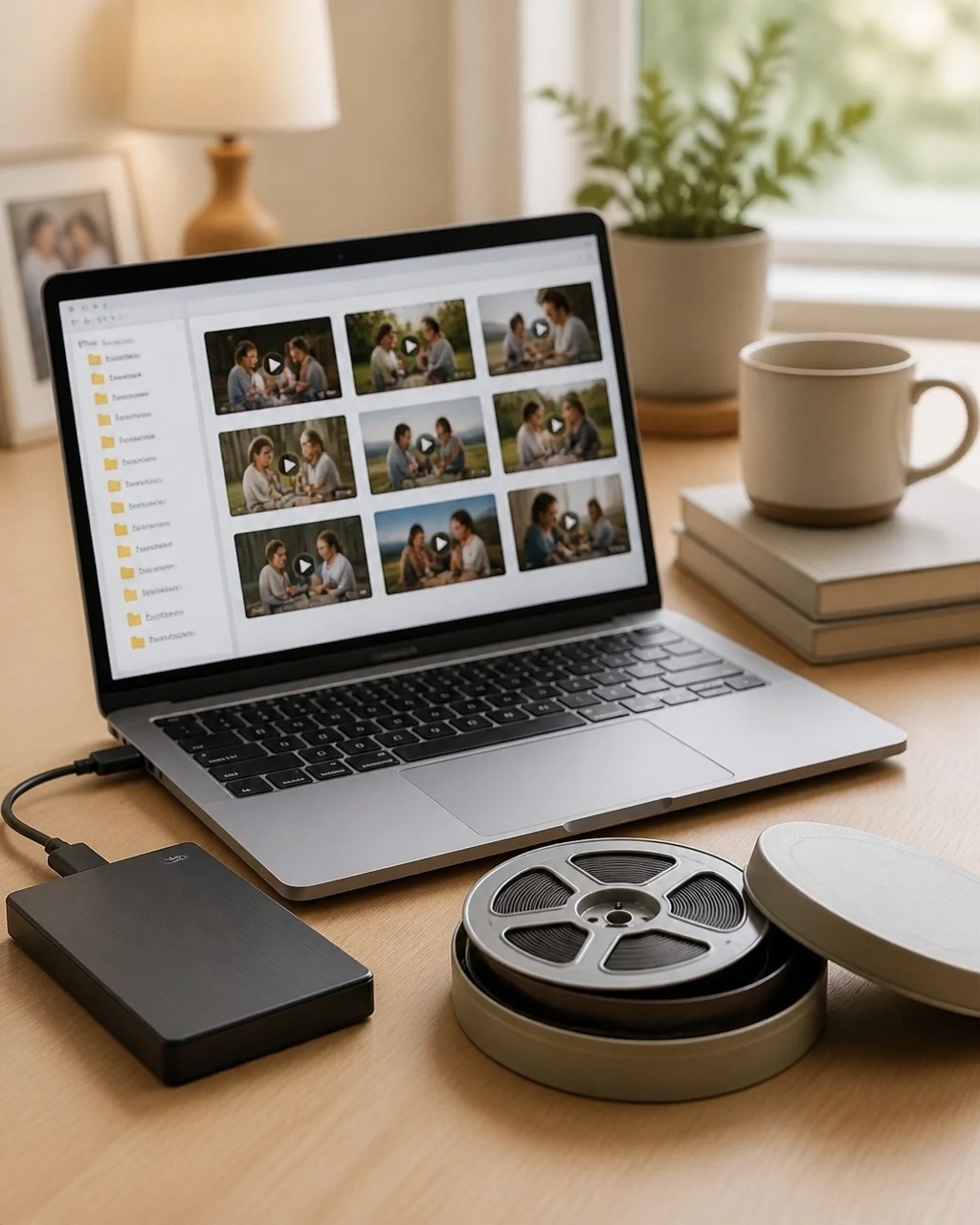
5. You Receive Digital Files You Can Watch and Share
One of the biggest benefits of an 8mm film transfer is accessibility. Once your home movies are digitized, you no longer need to set up a projector or locate aging playback equipment every time you want to watch them.
Digital video files can make it easier to:
- Watch home movies on current devices
- Share memories with family members
- Create duplicate backups
- Include clips in family presentations
- Organize different reels by year or event
- Preserve memories for children and grandchildren
The exact delivery format depends on the project and the service options selected. Common digital video formats include MP4, while other professional formats may be appropriate for editing or archival purposes.
Scan A Lot offers digital media services and can help discuss available file and storage options. Its video transfer service describes delivery options such as MP4 and ProRes for video projects. If you are transferring film along with videotapes, photographs, slides, or audio recordings, combining related media into one preservation project may also make organization easier.
6. Your Original Film Still Matters
Digitizing your home movies does not mean the original reels should be discarded. The film remains an important part of your family archive and may be useful for future transfers as technology develops.
After your 8mm film transfer is complete, store the original reels in a stable, moderate environment away from excessive heat, moisture, and large temperature changes. Keeping the originals organized and properly protected gives your family an additional preservation resource.
The digital files should also be backed up. A practical preservation approach is to keep more than one copy in more than one location. For example, you might store one copy on a local drive and another in a separate secure location or cloud storage account.
Digital files are easier to duplicate than film, but they still require responsible care. Storage devices can fail, and file formats or software can change. Periodically checking your files and maintaining current backups helps keep the memories accessible.
For broader preservation guidance, the Library of Congress Preservation Division provides information about caring for personal collections and digital materials.
How Long Does an 8mm Film Transfer Take?
Turnaround depends on the number of reels, the condition of the film, the selected services, and the current project schedule. Scan A Lot explains that most orders are completed within approximately one to two weeks, while larger projects may require more time.
A professional service should communicate the expected timeline before work begins. If you have a family event, anniversary, memorial, or reunion coming up, mention the date when requesting a quote.
It is also helpful to let the service know if you want your reels transferred in a particular order or if certain reels are especially important. Clear notes can make the finished digital collection easier to understand and enjoy.
Choosing a Professional 8mm Film Transfer Service
When comparing services, consider more than the advertised price. Ask how the film is inspected, whether the transfer uses dedicated scanning equipment, what file formats are available, and how the originals are handled and returned.
You may also want to ask:
- Do you transfer both standard 8mm and Super 8?
- Are the reels cleaned and inspected before scanning?
- What happens if a reel has a damaged splice?
- Will each reel be provided as a separate file?
- What image adjustments are included?
- How will the digital files be delivered?
- Are my original reels returned?
- What is the expected turnaround time?
Scan A Lot has been preserving personal media since 2006, with local service in West Hempstead, New York, and shipping options for customers beyond the area. The team works with film reels, videotapes, photographs, slides, negatives, audio tapes, and other aging formats.
Give Your Home Movies a Future Beyond the Projector
An 8mm film transfer turns stored-away reels into memories your family can revisit. Professional inspection, careful preparation, frame-by-frame scanning, and thoughtful digital delivery can make a meaningful difference in the final result.
If your home movies have been sitting in a closet, basement, or cabinet, you do not need to wait for a special occasion to find out what they contain. Contact Scan A Lot to request a quote for professional 8mm and Super 8 film transfer services. You can also call 844-SCAN-PIX (844-722-6749) to discuss your collection and the best way to preserve it.
Categories: Preservation · Tips & Tricks
#8mmFilmTransfer #Super8FilmTransfer #8mmFilm #Super8Film #FilmDigitization #FilmTransfer #HomeMovieTransfer #HomeMovieDigitization #HomeMoviePreservation #FamilyMemories #MemoryPreservation #PreserveYourMemories #DigitalMemories #FamilyHistory #FamilyArchive #PersonalArchives #LegacyPreservation #HeritagePreservation #AnalogToDigital #MediaConversion #MediaDigitization #FilmScanning #FrameByFrameScanning #HighDefinitionScanning #VintageFilm #VintageHomeMovies #OldHomeMovies #FamilyHistoryProjects #DigitizeFilm #ConvertFilmToDigital #PreserveFamilyHistory #ShareFamilyMemories #DigitalFamilyArchive #FilmReels #MovieFilmReels #8mmReels #Super8Reels #FilmPreservation #ArchivalPreservation #MemoryKeeper #FamilyLegacy #GenerationalMemories #Nostalgia #HomeMovieMemories #ScanALot #ScanALotPhotos #LongIslandBusiness #WestHempsteadNY #NewYorkMediaConversion #ProfessionalDigitization #PreservationServices #TipsAndTricks