

Categories: Preservation · Tips & Tricks
A family’s photo collection rarely stays in one place. There may be albums from the 1960s on a bookshelf, vacation prints in shoeboxes, school portraits in envelopes, and newer snapshots tucked into drawers. Each group holds a part of the family story, but finding a particular person or occasion can take time when photos are scattered across decades and containers.
Professional photo scanning brings printed pictures into a digital collection that is easier to view, share, and enjoy together. Instead of handling one album at a time to revisit a memory, family members can browse digital images on a computer, tablet, or phone. And with a thoughtful plan for grouping the collection, the digital files can be easier to navigate than the original mix of prints and albums.

From scattered prints to a collection
A box of family photos is more than a stack of pictures. It may hold a timeline: grandparents’ early years, childhood birthdays, family gatherings, weddings, and everyday scenes that became meaningful over time. The challenge is that these moments may be stored in different formats and places, with varying levels of context.
Professional scanning helps bring those images into a format families can revisit and share. At Scan A Lot, printed photos can be scanned at standard 300 DPI or at 600 DPI for enhanced detail. The photo and slide scanning service is designed for prints, albums, slides, and negatives, with digital files delivered by download link or USB drive.
A digital collection can also make family conversations easier. A relative may recognize a person in a portrait, remember the location of a picnic, or add a name to a photograph that has gone unidentified for years. When relatives can view the same image from different places, it becomes easier to gather those memories and keep useful context with the collection.
Keeping the story connected to the pictures
Scanning creates digital copies, but organization gives them meaning. The way a family chooses to group images might reflect the way they already think about the collection: by decade, album, branch of the family, event, or a mix of these. Preserving a familiar album sequence can also help maintain the original flow of a story.
Before booking a project, consider what matters most when you look for a particular photo. Is it easier to remember the year, the people, or the event? Share those preferences with the scanning service and ask how the digital files will be grouped and labeled. If captions or notes are written on the backs of prints, mention that too so you can discuss the best way to keep that context alongside the images.

Not every date or name will be known, and that is perfectly fine. A folder labeled “early family gatherings” or an approximate decade can still make images easier to find without guessing at details. As relatives identify people and places, the collection can grow into a richer family record.
The National Archives’ guidance on digitizing family photographs emphasizes using descriptive identifiers and adding basic information such as who, what, where, and when. You do not need to have every caption ready before scanning. Even a few names or dates can help distinguish one group of images from another.
High-resolution results, handled with care
Family prints are often irreplaceable, so choosing a service is about more than getting files quickly. It is also about entrusting meaningful originals to people who understand their value. A professional service can handle a collection of prints and albums as a dedicated project, using scanning equipment intended to capture clear digital images.
Scan A Lot offers photo scanning at 300 DPI and 600 DPI, so families can choose an option that fits their collection and preferences. If you have larger prints, fragile items, unusual sizes, or photographs that need extra attention, ask about them when you discuss the project. Clear expectations at the start help ensure the service matches your needs.
The Library of Congress guide to photograph care and storage recommends careful handling and suitable storage for original photographs. Digitizing gives families a way to view and share copies while reducing the need to bring out original prints every time they want to revisit a memory. It is still wise to keep the originals after scanning; digital files also benefit from thoughtful backup and care.
Making family photos easier to share
Once a collection is digital, it can be shared in ways that suit the family. A relative who lives across the country can view a set of reunion pictures. Siblings can compare memories and help identify people. A family can select favorite images for a slideshow, a photo book, or a private shared album.
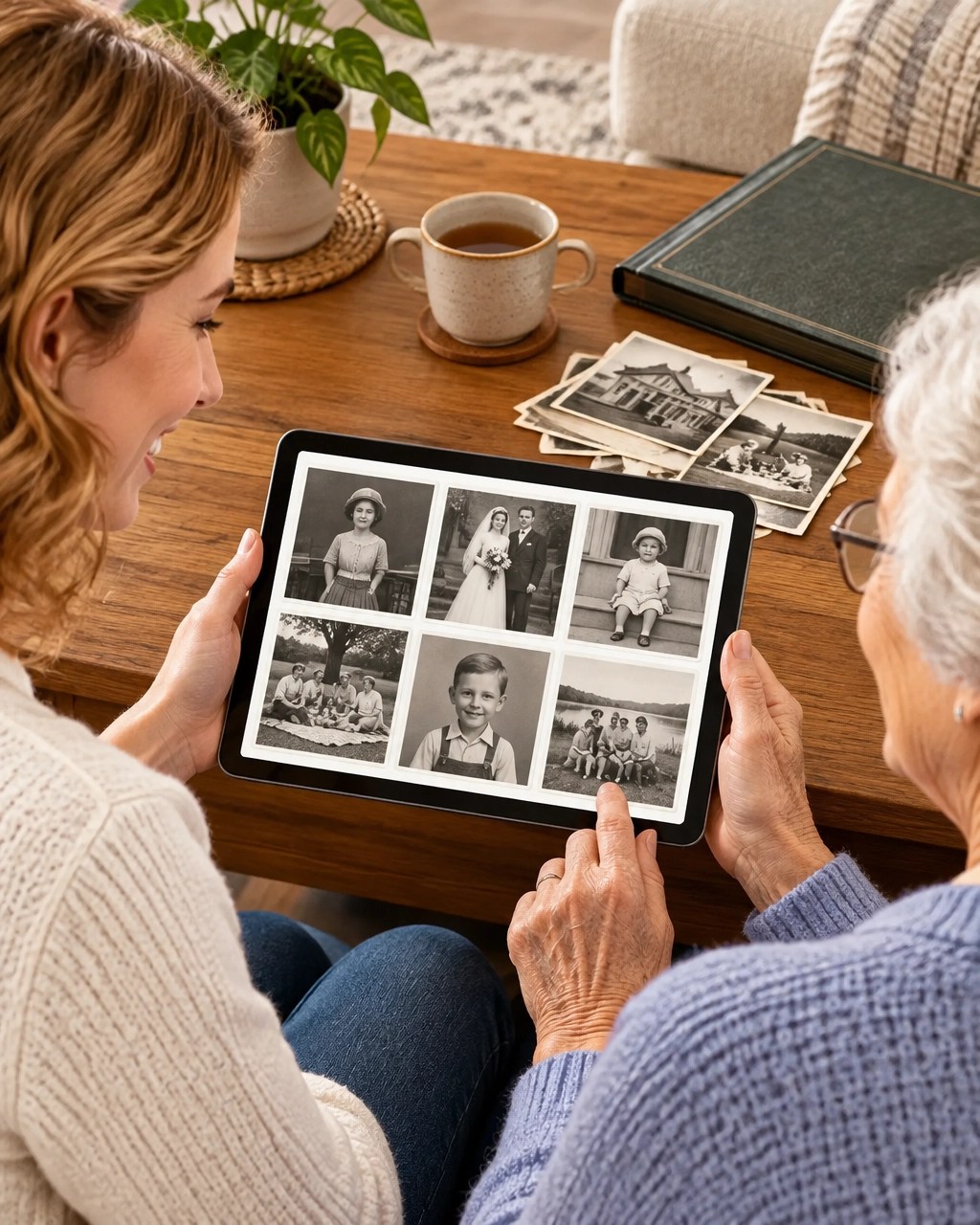
Digital access can also make treasured images more useful in day-to-day family life. A few selected photos can be displayed on a digital frame or opened during a visit with a parent or grandparent. For families supporting someone living with dementia or Alzheimer’s, familiar photographs may offer a gentle prompt for conversation and connection. Every person responds differently, but having the images easy to access can make it simpler to share a moment together.
When sharing, families can choose what feels comfortable and private. A collection does not need to be posted publicly to be useful. Sharing selected images with relatives through a private link or directly on a device can keep meaningful photographs within the family while making them more accessible.
A project that fits the size of your collection
Some families begin with one album or a carefully chosen group of prints. Others are ready to bring together several boxes accumulated across generations. You do not need to solve every question about dates and names before getting started. It helps to have a general sense of what you have (albums, loose prints, envelopes, or a combination) and to tell the service what you hope to do with the finished files.
Scan A Lot is dedicated to converting printed photos into high-resolution digital images and handling each project with care. If you are unsure which scanning option makes sense for your collection, ask before booking. You can discuss the formats you have, your preferred delivery method, and how you would like to access the finished images.
Most importantly, the value of a scanning project is not measured only by the number of files. It is in bringing memories out of storage and making it easier for people to see, recognize, and share them. A picture once tucked away in an envelope can become part of a family collection that is ready for the next conversation, reunion, or generation.
Bring your family photos together
If your prints are spread across albums, shoeboxes, and envelopes, professional photo scanning can help turn them into one accessible digital collection. Book a photo scanning project with Scan A Lot to discuss your collection, choose a scanning option, and make more of your family’s memories available to share. You can also contact Scan A Lot with questions before getting started.
#PhotoScanning #FamilyPhotoScanning #PhotoDigitization #PreserveFamilyPhotos #FamilyHistory #FamilyMemories #DigitalPhotoCollection #PhotoPreservation #HighResolutionScanning #PrintedPhotos #VintageFamilyPhotos #FamilyAlbums #FamilyLegacy #MemoryPreservation #ShareFamilyPhotos #PhotoScanningService #ScanALot #LongIslandFamilies #Preservation #TipsAndTricks