

Categories: Tips & Tricks, Preservation
Some of the most meaningful photographs in a home aren’t tucked away in albums or boxes. They’re the portraits you pass every day: a great-grandparents’ wedding picture, a grandparent’s formal portrait, or a baby photo that has held its place on the wall for decades.
These images can be especially valuable because they connect family members across generations. They may be among the few photographs that show an ancestor clearly, or preserve a familiar face from a time before anyone thought to write down names and dates. Because they are on display, they’re easy to enjoy, and easy to overlook as photographs that need care.
Thoughtful photo scanning can create a digital copy of these portraits, making them easier to share and helping preserve the image if the original changes over time.
The portraits on your wall often tell a bigger story
A framed portrait can be more than a picture. It might be the only surviving wedding photograph of an ancestor, a record of how a relative looked as a child, or a familiar family image that has been part of the home for generations.
The frame itself may hold clues, too. Clothing, hairstyles, studio markings, a handwritten note on the back, or the people pictured can all help tell the story. When you make a digital copy, consider keeping useful context with it: names, approximate dates, locations, and any family memories connected to the image. Those details can help future generations understand what they’re looking at.
A digital image also makes it possible to share the portrait with relatives who live elsewhere. Family members can view it on a phone, computer, or digital frame without needing the original to leave its place of honor.

Why framed photographs need a little extra attention
A framed photograph may seem well protected, but framing doesn’t make it immune to its surroundings. Light exposure can gradually affect photographs, and the Library of Congress notes that light damage is cumulative. Keeping an original away from direct sunlight and other strong light can help limit unnecessary exposure. UV-filtering glazing can be useful, but it does not block all visible light or make constant bright display harmless. See the Library of Congress guidance on light exposure.
The materials inside a frame matter as well. Older frames may contain ordinary cardboard, wood, or other materials that aren’t designed for long-term preservation. Depending on the photograph and how it is framed, these materials can contribute to staining or other changes. The Library of Congress offers more detail in its guidance on matting and framing photographs.
Glass can also be a concern if the photograph is pressed directly against it. Changes in temperature or humidity may lead to condensation, and an image surface that has adhered to glass can be difficult to separate safely. If a photograph seems stuck, damaged, or unusually fragile, don’t force it out of the frame. The National Park Service’s advice on saving photographs emphasizes the importance of avoiding attempts to pull adhered photographs away from glass or backing.
These are reasons to give a treasured portrait attention, not reasons to panic. Many photographs remain meaningful and viewable for years. A calm assessment, sensible display conditions, and a digital copy can all be part of caring for them.
Photo scanning preserves the image while the original stays a keepsake
A high-quality digital copy gives your family another way to enjoy an important portrait. It can be shared with relatives, included in a family history project, or kept with other digitized photographs. The original can remain in its frame or be stored carefully, while the digital version becomes the convenient copy for everyday viewing.
That distinction matters: photo scanning preserves a version of the image, not the physical photograph itself. The print, frame, handwritten notes, and family history surrounding it still have their own value. A digital copy is a practical companion to the heirloom, not a replacement for its presence in the home.
If a print can be safely removed from its frame, scanning it separately may capture more detail than photographing it through glass. But not every portrait should be removed. If the print appears attached to the glass, is flaking, or seems brittle, seek advice from a photograph conservator rather than risking damage. The Library of Congress also shares broader care guidance for photographs.

A few thoughtful tips for choosing portraits
You don’t need to scan every framed picture at once. Start with portraits that feel especially significant to your family: images of relatives who have passed away, wedding or graduation portraits, childhood pictures, and photographs that are difficult to replace.
It can also help to include more than the tightly cropped face. The full portrait, including the clothing, background, frame or mount if relevant, and any visible studio details, may preserve context that matters later. If there are notes on the back, keep that information with the digital file or in a separate record.
For important photographs, think about where the digital copy will live. Keep a copy somewhere convenient for sharing and another backup in a separate location or trusted cloud account. A clearly named file, such as “Anna-and-James-wedding-estimated-1940.jpg”, is more useful to your family than a generic camera filename. If you aren’t sure of a date or identity, mark it as an estimate rather than presenting a guess as fact.
Bring a family portrait into the family’s shared history
A framed image can become part of the background of daily life. Making a digital copy invites a closer look: relatives may recognize someone, remember a story, or add a name that was never written down. The image can become easier to pass around, discuss, and include in a family collection.
Digital files can also be viewed together across generations. A portrait on a tablet or computer may prompt a conversation with a grandparent or other relative who can identify the people and places in it. That added context is another meaningful part of preservation.
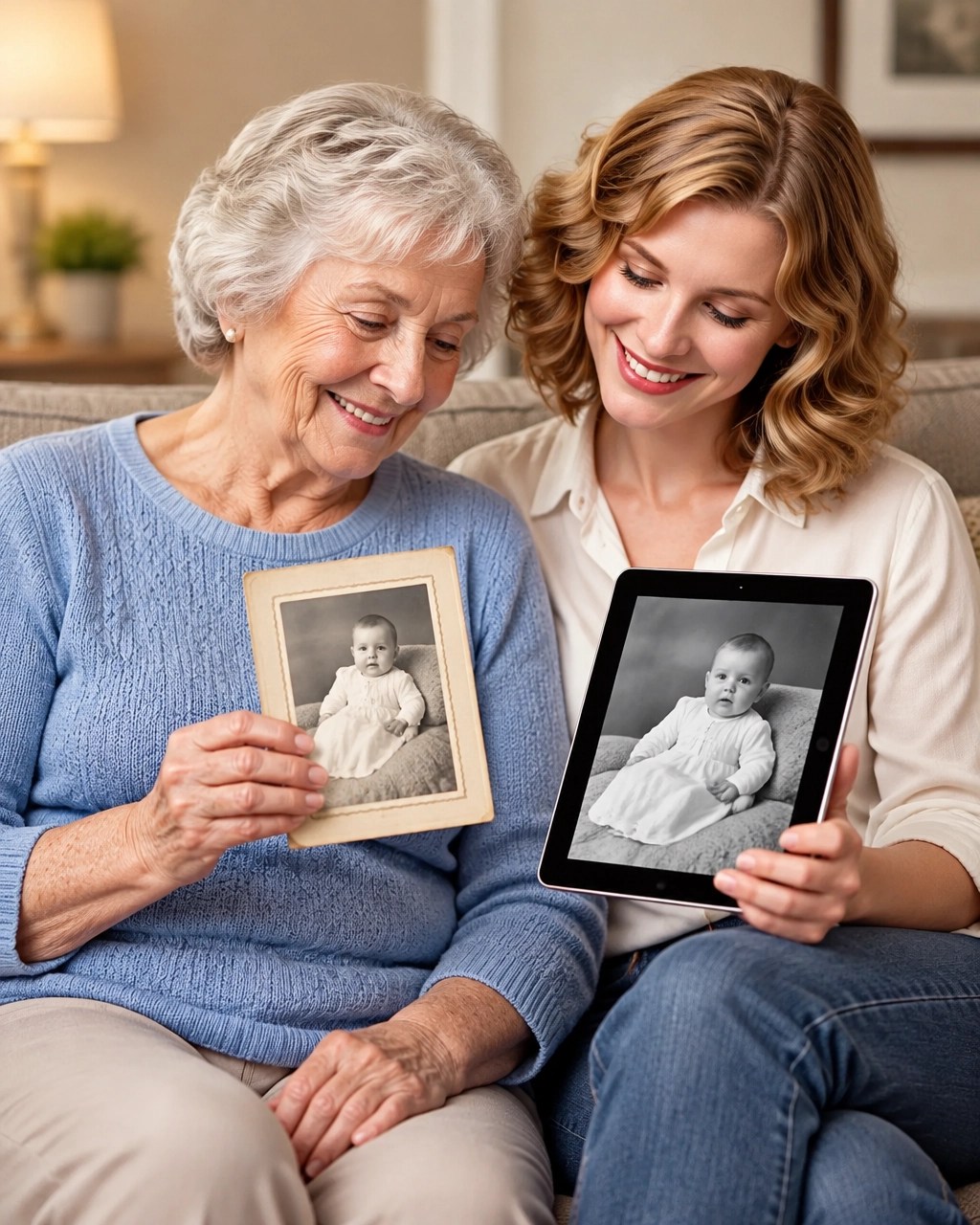
At Scan A Lot, we handle printed photographs, albums, slides, and negatives with care. Our photo and slide scanning service offers digital files for viewing, sharing, and safekeeping. If you’re unsure whether a framed portrait should be removed before scanning, contact us to discuss the photograph and its condition first.
The portraits already hanging on your walls may be some of the most important images your family owns. Photo scanning can help make those memories easier to share and keep close, while the original remains part of your home’s story.
To ask about a family portrait or begin a scanning project, contact Scan A Lot at scanalot.photos.
#PhotoScanning #FamilyPhotoScanning #PhotoPreservation #PreserveFamilyHistory #FamilyHistory #FamilyPhotos #HeirloomPortraits #WeddingPortrait #VintagePhotos #OldPhotos #FamilyLegacy #DigitalPhotoPreservation #PhotoDigitization #DigitizePhotos #PrintedPhotos #PortraitPhotography #AncestorPortraits #GenerationalStories #MemoryPreservation #PreserveYourMemories #FamilyArchives #PhotoArchives #FamilyKeepsakes #HistoricalPhotographs #PhotoCare #PictureFrames #FramedPhotos #BabyPhotos #WeddingPhotos #ShareFamilyMemories #DigitalMemories #ScanALot #LongIsland #NassauCounty #WestHempstead #TipsAndTricks #Preservation