

Categories: Tips & Tricks, Preservation
A shoebox of family photographs can hold more than names and dates. It may hold the story of a first home, a much-loved aunt, or a holiday everyone remembers differently. The same is true of a VHS tape, an audio cassette, or a reel of film: the memory is in the recording, but so is the meaning someone can explain.
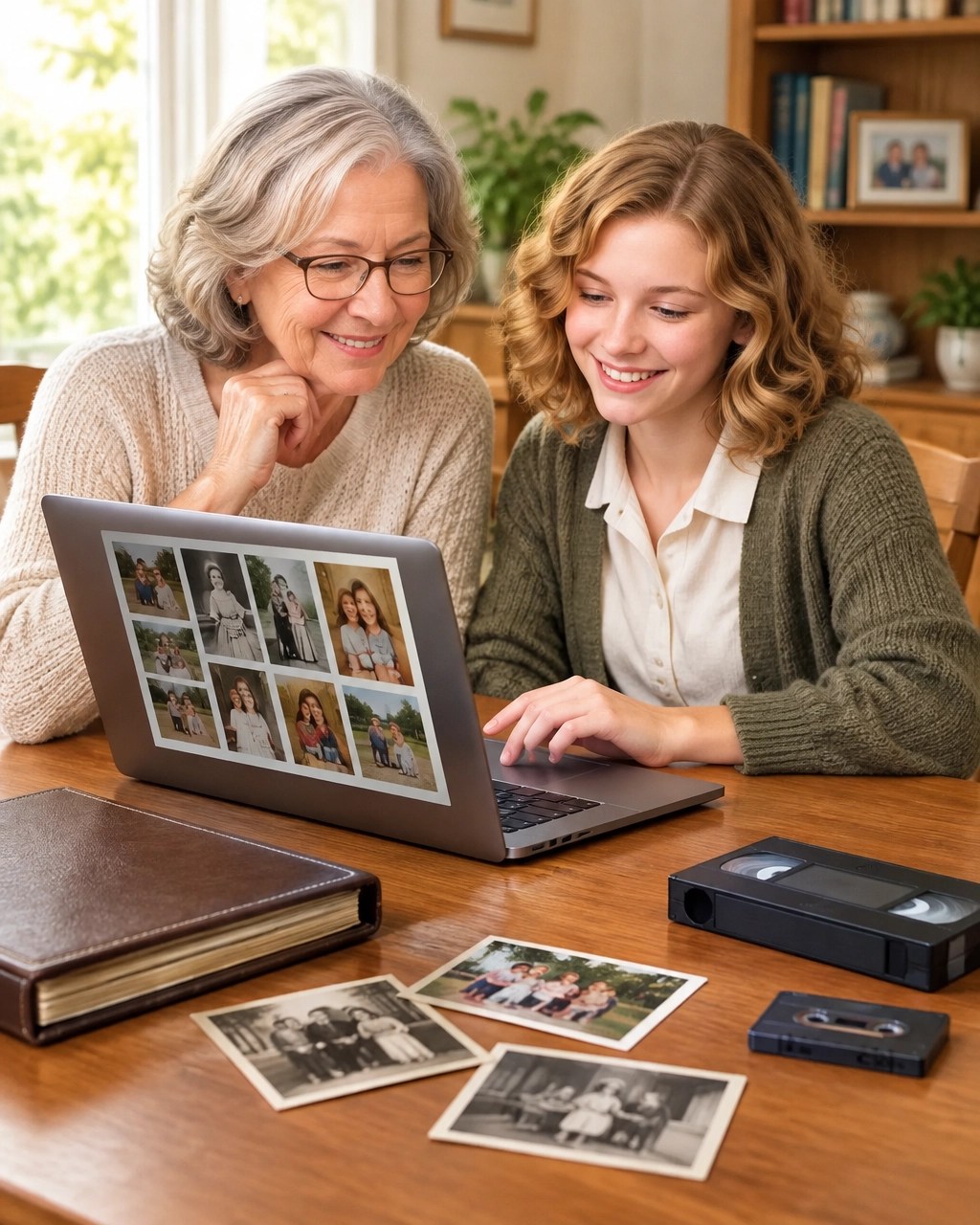
A family digitizing project can bring generations together around those memories. A grandparent can help identify the people, places, and events in the collection, while a grandchild can help coordinate the project and think through how the digital files will be organized and shared. It’s a chance to preserve both the media and the stories that make it matter.
If you’ve searched for “transfer to digital near me,” you may already be considering what to do with a family collection. Involving a grandparent and grandchild can make that process more personal, and the resulting archive much richer.
The stories that don’t fit in a photograph
A digital image can show who was standing in the yard, but it can’t tell you who took the picture, why everyone was dressed up, or what happened just before the camera clicked. A tape may hold a familiar voice or a birthday party, but only someone who remembers the occasion may recognize the people talking in the background.
That knowledge is part of the family record. When the older generation helps identify faces, places, and voices, those details can be connected to the right photos and recordings. A grandchild, in turn, may ask questions the family has never thought to ask, or hear a familiar story from a new perspective.
The Oral History Association’s best-practices guidance emphasizes preparing for interviews, treating narrators with respect, and documenting recordings. Families can take a similarly thoughtful approach: make space for stories, respect what someone does or doesn’t want to share, and note who provided the information.

A project with room for both generations
The collaboration doesn’t need to feel like a formal history project. It can start with one album, a small group of photographs, or a handful of tapes selected together. Keeping the focus manageable leaves time to talk, rather than turning the experience into a race to get through every box.
The grandparent can bring the context: names, nicknames, family relationships, approximate dates, and the stories that come to mind. The grandchild can take on the organizing side: keeping track of what the family wants digitized, noting questions to revisit, and helping decide how relatives might access the finished files.
There’s no need to have every answer. “I think this was taken in the early 1970s” or “I can’t remember her name, but she lived next door” can be useful context. Recording uncertainty honestly is better than assigning a confident but possibly incorrect label.

Let conversation lead the way
A photograph often works best as a conversation starter. Instead of trying to identify everyone at once, invite the grandparent to share what catches their attention. Open-ended prompts can bring out details a simple name-and-date label might miss:
- “What do you remember about this day?”
- “Where was this taken?”
- “Who else was there?”
- “What was happening just before or after this picture?”
- “Is there a story you hope the family remembers?”
The Smithsonian’s oral-history guidance recommends open-ended questions that encourage people to describe experiences in their own words. The goal isn’t to conduct a perfect interview. It’s to listen, follow a story that matters to the person telling it, and capture the details they want to preserve.
Some conversations may bring up differences in memory. One relative may recall a date differently, or two people may remember an event from different viewpoints. Those differences don’t have to be resolved for the collection to be valuable. A note about who remembers what can help future family members understand the story’s sources.
Think beyond printed photographs
A family collection might include more than photo albums. Slides, negatives, VHS tapes, audio cassettes, and 8mm or Super 8 film can each hold a different kind of memory. A grandparent may recognize people and places in a still image, while a video or audio recording may bring back voices, expressions, music, and family habits.
That variety can make the project a shared discovery. A grandchild might help match a tape to a family event, while the grandparent remembers who is speaking or explains the setting. And when family members identify a person, place, or occasion, that information can be kept alongside the digital file, rather than existing only in the memory of the person who told the story.
For professional digitization of printed photographs, slides, and negatives, explore Scan A Lot’s photo and slide scanning service. Families with home movies can learn about 8mm and Super 8 film transfer. Scan A Lot also works with video and audio tapes, so different parts of a collection can be considered together.
Make the digital collection easy for family to understand
Once files are digitized, clear organization helps relatives find and enjoy them. Names, dates, places, and short notes can make a digital collection easier to browse. When a detail is approximate or uncertain, say so. If a caption or story came from a particular family member, noting who shared it keeps that context attached to the memory.
It can also help to talk about who the family wants to share the collection with. Some files may be suitable for a wider family group, while others are best kept private. These decisions can be made together, with the people whose voices and stories are included having a say in how they’re shared.
A digitized collection doesn’t replace the originals. It gives family members another way to view and share them, while the original photographs, albums, tapes, and film remain part of the family archive. For additional guidance on caring for physical photographs and other materials, the Library of Congress preservation resources offer practical information.
A meaningful way to spend time together
For a grandparent, the project can be a welcome opportunity to pass along stories and family knowledge. For a grandchild, it can be a way to learn more about the people and experiences that shaped the family, and to contribute practical skills to preserving them. They’re not just sorting old media; they’re making a record that can help future generations understand the people behind it.
There’s no single right size for a family project. It might begin with a small album or a few recordings and grow naturally as more relatives join in. What matters is making room for conversation and keeping the stories connected to the memories they explain.
If you’re looking for transfer to digital near me, Scan A Lot can help you explore options for photos, slides, negatives, video tapes, audio tapes, and film. Visit scanalot.photos or contact Scan A Lot to ask about your family collection and find a suitable next step.
#FamilyHistory #FamilyMemories #GrandparentsAndGrandchildren #IntergenerationalStories #PreserveFamilyHistory #MemoryPreservation #DigitizeFamilyPhotos #PhotoScanning #PhotoDigitizing #TransferToDigitalNearMe #MediaDigitization #VideoTapeConversion #VHSConversion #AudioTapeDigitization #CassetteDigitizing #FilmTransfer #8mmFilm #Super8Film #SlideScanning #NegativeScanning #FamilyArchive #DigitalFamilyArchive #OralHistory #FamilyStorytelling #HeirloomPhotos #OldPhotographs #HomeMovies #PreserveThePast #FamilyLegacy #MemoryKeeping #TipsAndTricks #Preservation #ScanALot #ScanALotPhotos #DigitalMemories #StoriesThatMatter