

A recipe box can tell you what went into a family dish. A photograph can bring back the person who made it.
Maybe it’s your grandmother stirring a pot while the rest of the family gathers around the kitchen. Maybe it’s your dad rolling dough at the counter before a holiday dinner. These kitchen pictures may not have been taken for a portrait or a special occasion. They were made in the middle of life, and that is often what makes them so meaningful.
Paired with handwritten recipes, those photographs offer a vivid glimpse of family history: not just what people ate, but who brought everyone together, how they worked, and what an ordinary day looked like. Photo scanning can help make these moments easier to revisit and share, while the recipe cards remain part of the story.
A recipe card carries a person’s voice
A handwritten recipe is more than a list of ingredients. Its handwriting may be familiar before you even read the name at the top. A note in the margin might reveal how the cook adjusted a dish, or who first passed the recipe along. A card might be worn from years of use, with a name, date, or reminder added long after it was written.
The National Archives describes family recipes as valuable records of family life and history, including the stories and personal details attached to them. That context matters: recipes often connect us to the people, places, and traditions behind the food.
A photograph can add another layer. You may recognize the handwriting on a card, but a kitchen snapshot shows the person at work: standing beside the stove, sharing a task, or pausing for a picture amid the bustle. The recipe tells you what was made. The photograph helps you remember the cook.
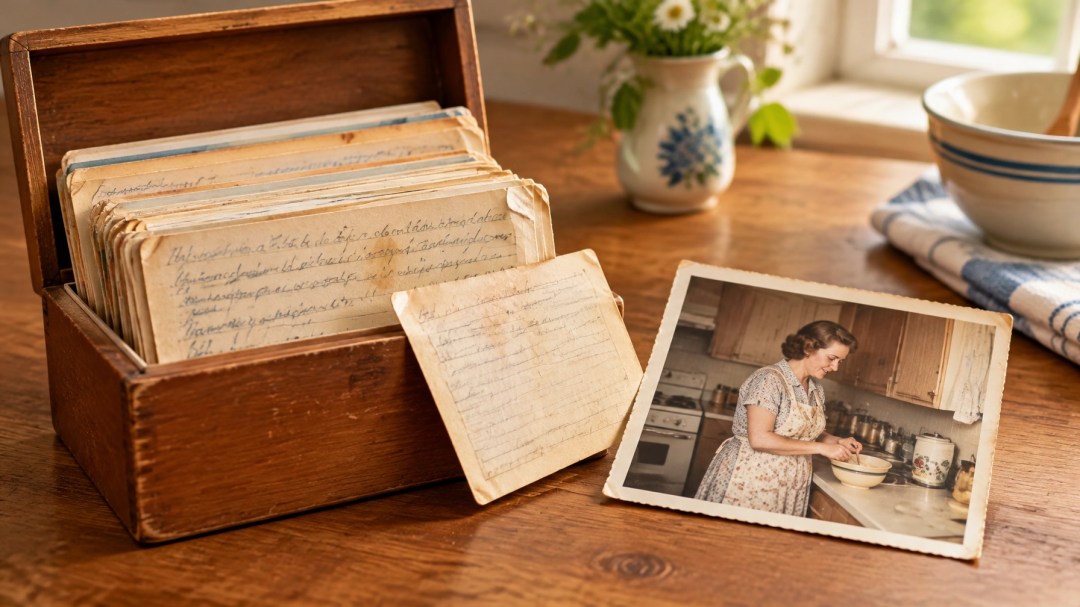
Kitchen photos are family history in motion
Some of the most loved family photographs are candid. They show someone serving dinner, decorating a cake, tasting a sauce, or keeping an eye on several pans at once. The kitchen may look different now, but the details can feel immediate: the familiar table, the old curtains, a favorite mixing bowl, or a relative leaning in to offer advice.
Holiday cooking photos are especially rich with context. They can show who arrived early, who helped with the preparation, and which dishes appeared every year. Even a picture taken in passing can preserve the expressions and gestures that a formal photograph might miss.
These images are often revisited because they invite stories. A relative may recognize the person at the counter, then recall a holiday meal, a family joke, or the way a particular dish was served. The photograph becomes a starting point for conversation rather than a picture with only one meaning.
Bringing photographs and recipes together
The most useful family records are often the ones that make sense together. A recipe card can be linked in memory to a snapshot of the cook, a holiday table, or the kitchen where the dish was prepared. Keeping those connections in view makes it easier for younger family members to understand not just how a recipe was made, but why it mattered.
A few simple details can help preserve that context alongside your family photographs:
- Names: Who wrote the recipe, and who usually made it?
- Occasions: Was it served at holidays, birthdays, or ordinary Sunday dinners?
- Places: Which kitchen, home, or town is shown in the photograph?
- Memories: What do relatives remember about the cook, the dish, or the gathering?
You don’t need a complete family history for every image. Even a short note, “Aunt Ruth making her apple cake before Thanksgiving”, can give a photograph meaning for someone who never met her.
The Smithsonian’s guide to presenting oral-history findings also emphasizes the value of connecting recipes with the stories, people, and traditions around them. That idea works just as well in a family collection: an image becomes more meaningful when its details and memories aren’t separated from it.

Why photo scanning can help keep these stories close
Printed photos are easy to tuck away in albums, envelopes, or boxes, and just as easy to leave there for years. Photo scanning creates digital copies that can be viewed on everyday devices and shared with relatives who live elsewhere. A family can revisit a kitchen snapshot together even when the original print stays safely stored.
Digitizing photographs can also make a collection easier to explore. A scanned image can be grouped with other pictures from the same holiday or home. Family members can add names and notes to help identify the people and places in it. And when a photograph is shared digitally, the story can travel with it instead of relying on someone to remember every detail later.
For more on what professional photo scanning can offer, visit Scan A Lot’s page on photo and slide scanning or read about high-resolution photo scanning and preservation.
Photo scanning is for photographs; it doesn’t automatically digitize handwritten recipe cards or other documents. But when you bring the images together with the recipes and stories your family keeps, each can help illuminate the others.
A living record of family care
The recipes families return to most are often tied to more than taste. They can represent a person who made sure everyone was fed, a tradition carried across generations, or a kitchen where relatives gathered year after year.
A photograph of that cook can help keep the memory personal. Instead of knowing only that a dish came from “Grandma’s recipe box,” future generations can see Grandma in her kitchen, perhaps with a spoon in hand and familiar faces around her.
That is one reason kitchen photographs and recipes can become some of the most-used family heirlooms. They are practical and emotional at once: a dish may be made again, a photograph may prompt a story, and the two together can help a family feel closer to the people who came before.
Preserving these pictures doesn’t require turning family memories into a formal archive. It can begin with the photographs you already know matter, along with the names and small stories that make them recognizable. Photo scanning helps make those images more accessible, so they can continue to be part of family meals, conversations, and traditions.
Categories: Tips & Tricks, Preservation
If you have family kitchen photographs you’d like to preserve, contact Scan A Lot or visit scanalot.photos to learn more about photo scanning and other media conversion services.
#PhotoScanning #FamilyRecipes #HandwrittenRecipes #RecipeCards #FamilyHistory #FamilyMemories #KitchenMemories #FamilyCooking #HolidayCooking #Grandparents #Parents #FamilyTraditions #MemoryPreservation #PreserveYourMemories #DigitalPhotoScanning #PhotoDigitization #ScannedPhotos #FamilyArchive #FamilyLegacy #PersonalHistory #GenerationalStories #FoodAndFamily #FoodHeritage #HomeCooking #HolidayTraditions #CandidFamilyPhotos #VintageFamilyPhotos #KitchenStories #GrandmasRecipes #FamilyHeirlooms #PhotoPreservation #DigitalMemories #ScanALot #MediaConversion #PreservingFamilyHistory #StoriesWorthSharing #EverydayMemories #FamilyGatherings #RecipeTraditions