

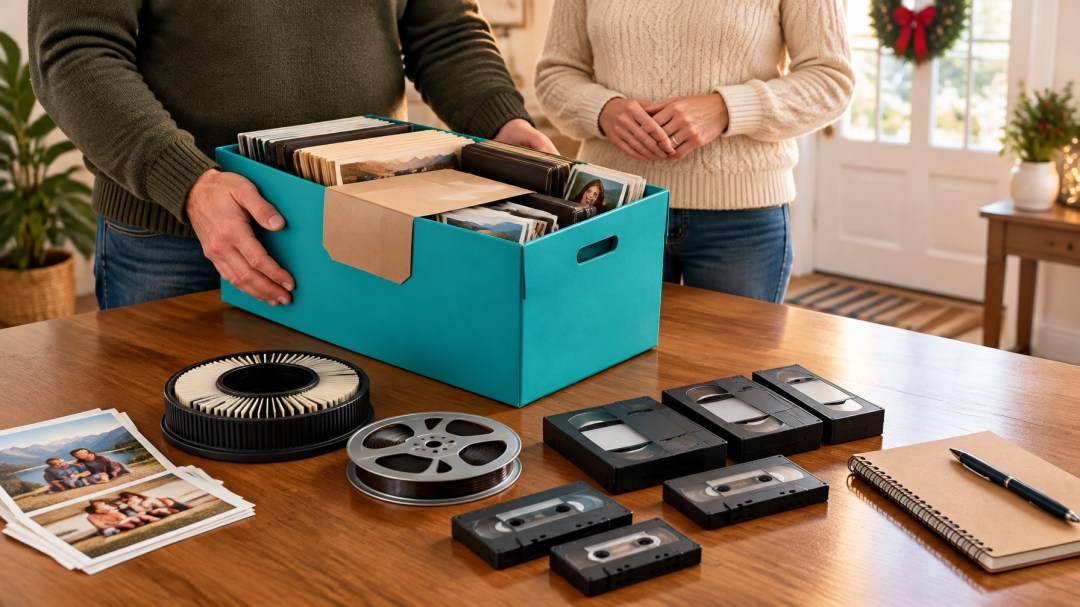
The box is familiar to everyone. It may have lived in a hall closet, travelled between siblings’ homes, or surfaced at every family gathering with the same question: “Who’s taking this?” Inside are snapshots, albums, tapes, slides, and maybe a film reel or two. The memories belong to the family, but deciding what to do with the collection has never quite made it to the top of anyone’s list.
The early holiday season brings a rare opportunity. Adult siblings are together in one room, stories come easily, and people who recognize the faces and places are right there to help. Instead of letting the box go home with one person again, the family can turn the gathering into a shared moment of discovery, and make a plan to digitize the collection so everyone can have a copy.
For families searching “transfer to digital near me,” the right local team can make that next step feel straightforward. First, though, the most valuable part may happen around the table: agreeing on what these memories mean to everyone.
The box is more than a box
A family archive can carry different meanings for different siblings. One person remembers the photos from childhood; another has kept the tapes for years; someone else may have wondered why a favorite album never came back after the last visit. These feelings can coexist with affection and good intentions.
There is no need to settle every old disagreement before enjoying the memories. Start with curiosity. Ask who remembers a particular photo, what story belongs with a tape, or whether anyone knows where a reel was filmed. Let the conversation help the family see the collection as something to share rather than something one person has to manage alone.
That shift can be small but important: the goal is not to decide who gets the box. It is to make sure the memories inside are accessible to the people who care about them.

Turn the holiday gathering into a family archive day
When everyone is together, identifying and discussing old media is easier. The person who knows the cousins’ names may be visiting from out of town. The sibling who remembers the summer house can help identify the location in a photograph. A parent or older relative may recognize voices on a recording or recall the year of a family trip.
Rather than trying to finish the whole project in one afternoon, treat the gathering as a chance to make shared decisions. Look through a few items together, note the stories people tell, and decide what feels most important to preserve first. You might begin with the childhood home movies everyone remembers, a box of family photographs, or recordings of relatives whose voices the family wants to hear again.
It can also help to agree on a few practical points: who will coordinate the collection, who should receive digital copies, and how the original materials should be returned and kept. A brief conversation now can prevent the box from quietly becoming one sibling’s responsibility again.
There is no need to perfectly sort every print or identify every tape before asking a professional about digitization. Families often discover useful context as they go, and a local service can explain which formats it accepts and what options are available.
Make room for every kind of memory
Family collections often include more than printed photographs. The box may contain negatives, slides, VHS or Betamax tapes, audio cassettes, or 8mm and Super 8 film. Different formats call for different equipment and handling, so it is useful to describe what you have when asking for a quote.
A few links can help you explore the options: photo and slide scanning, video tape transfer, 8mm film transfer, and audio cassette digitization.
Not sure what a format is, or whether something is part of the collection? You can ask before deciding. Scan A Lot’s media digitization questions explain common formats and what to expect. The aim is not to make every decision around the holiday table. It is to come away with a clearer picture of the collection and a shared sense of what matters.
Why “everyone gets a copy” changes the conversation
A single original album can only be in one home at a time. Digital files make it possible for siblings to hold on to their own copy of the family story. People can revisit the same images, share them with their children, and add names or memories that help make the archive more meaningful.
That doesn’t mean the originals stop mattering. Many families want them returned and kept safely, alongside their new digital versions. A digital collection can be shared through a family album, a private cloud folder, or copies saved on personal devices. For long-term peace of mind, the Library of Congress’s personal digital archiving guidance is a helpful resource on keeping digital files organized and backed up.
The family can also decide how to share the collection in a way that works for everyone. Some relatives may prefer a link; others may appreciate files on a flash drive or help accessing them on a device. The point is to make sure the memories do not remain locked in one person’s closet, or one person’s account.

Choosing a local “transfer to digital near me” service
For families who would rather hand off a box in person, a nearby digitization team can make the process feel more personal. You can ask questions, explain what you’re bringing, and find out what happens to the originals. Before choosing a provider, consider asking which media formats they handle, what digital file types they offer, how originals are returned, and how you will receive the finished files.
Scan A Lot is based in West Hempstead, New York, and accepts local drop-offs by appointment. The team also works with customers who ship media. According to its frequently asked questions, original materials are returned, and timing can depend on the size and type of project. If several siblings are combining collections, contacting the team together can help clarify what to bring and how to coordinate the order.
A shared project can become a new family tradition
When the digitized files are ready, the family has a fresh reason to get together. You might watch a home movie after dinner, compare notes on faces in an old group photo, or invite relatives to help identify a place or a year. One person’s memory can fill in details another sibling never knew.
The archive can grow gradually. Names, approximate dates, and stories can be added over time. A photo that once seemed unremarkable may become meaningful when someone remembers the occasion. A familiar voice on an audio recording may lead to a story the younger generation has never heard.
Most of all, the box no longer has to be a source of uncertainty about who keeps it or when it will be passed along. The original collection can remain with its chosen custodian while digital copies make the memories available to everyone. The family gets to share the stories without having to share one fragile copy.
If you and your siblings are finally in the same room this holiday season, consider making time for the collection, not to finish every task, but to begin together. To discuss your family’s photos, tapes, slides, or film, contact Scan A Lot. A conversation can help you understand the options and decide what feels right for your family.
Categories: Tips & Tricks · Preservation
#TransferToDigitalNearMe #FamilyMemories #FamilyArchive #FamilyHistory #MemoryPreservation #DigitizeFamilyPhotos #PhotoScanning #SlideScanning #VideoTapeTransfer #VHSConversion #BetamaxTransfer #AudioDigitization #AudioCassetteTransfer #8mmFilmTransfer #Super8Film #HomeMovies #FamilyStorytelling #FamilyLegacy #SharedMemories #HolidayGathering #AdultSiblings #PreserveYourPast #DigitalFamilyArchive #PreserveMemories #LocalDigitization #MediaConversion #PhotoPreservation #MemoryKeeping #FamilyReunion #GenerationalStories #ScanALot #TipsAndTricks #Preservation