

A family’s reels had not simply recorded a life; someone had edited it. At a kitchen table, a small metal splicer, a razor blade, film cement and a strip of white tape had once helped turn scattered scenes into a story with a beginning, a middle and an end. 8mm film transfer can make those surviving scenes easier to watch, but the joins themselves tell a quieter story: one person’s decisions about what deserved to stay.
The Join Where Two Summers Meet
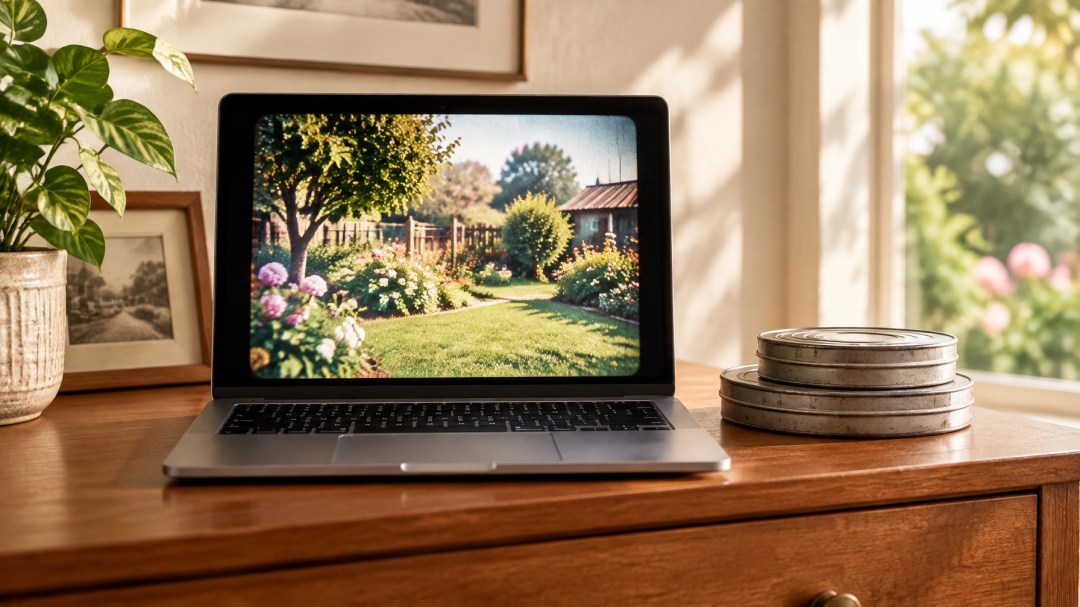
The reel turned, and the garden appeared: children running through bright grass, a familiar fence in the background, sunlight lying across the frame. Then came a tiny crooked splice. The picture jumped, and the light changed mid-frame.
The same child was suddenly inches taller. The coats in the background belonged to another season. A moment earlier, the family had seemed to be watching one long afternoon. Now it was clear that two different summers had been joined end to end.
A splice could be easy to miss until the image shifted. It might be a thin pale line across the film, a small thickening at the edge, or a join that had yellowed and lifted at one corner. Even a rough, slightly scratched frame around a cut had a particular intimacy. That was the part somebody had handled, lined up and pressed together.

Somebody Sat at the Kitchen Table With a Splicer
The reels had been assembled somewhere ordinary: perhaps at a kitchen table cleared after dinner, with the day’s mail pushed aside. A small metal splicer sat beside a razor blade, a bottle of film cement and a narrow strip of white splicing tape. The work was practical and personal. A reel ended; another scene began; the strip was joined so the family could watch a sequence instead of separate fragments.
Sometimes the choices showed up in the can as well as on the film. A handwritten label carried three dates crossed out and a fourth written in. The handwriting might have been hurried, but the revisions suggested someone returning to the reel and reconsidering what it held. A leader at the beginning might even have been made from a strip of something else entirely, an improvised start to a home-made archive.

The person cutting the film was often the same person who had held the camera. They had watched the original scenes, chosen the order and decided which pauses felt too long. Perhaps the camera had stayed on an empty patch of lawn, or a gathering had continued after the important moment seemed to be over. The editor knew the family and made a judgment about what felt dull.
What Got Cut Is Gone, and What Stayed Is a Choice
A reel can look like a record: a little window onto what happened, frame after frame. But the finished reel was already an interpretation. The cuts were a person’s opinion about what mattered, made with the care and limitations of the time.
That did not make the film less true. It made it more specific. The surviving scenes carried both the event and the editor’s attention: a birthday kept, a stretch of walking shortened, a visit arranged beside another one. A splice could reveal a transition the family had watched for years without noticing. One person had shaped the pace of the memories everyone else inherited.
What was removed could not be recovered from the reel, and there might not be another copy. The sensible reason to preserve the surviving film was not to imagine the worst. It was to keep what remained in a form the family could return to without needing to run a fragile strip through a projector again.
A person sitting at a kitchen table in the evening might once have held that strip up to a small illuminated viewer, studying a jump or a change in season. The film was a record, but it was also evidence of a hand at work: selecting, joining and deciding.

The Crooked Splice That Jumps
That little jump at a crooked splice did not erase the moments around it. Nor did a join that looked uneven mean the reel was beyond use. Splices, cement joins and curled leaders were completely ordinary in family film and were handled as a matter of course during 8mm film transfer. A splice that looked alarming was not a sign that the reel was ruined; film was more forgiving than many people expected.
The marks near a cut could be telling. A slightly scratched frame, a rough edge or a yellowed join often showed where hands had worked to bring one scene into the next. The film’s physical texture was part of its history, not an instruction to judge the person who made the edit. They were making a viewing copy for a family, with the tools and materials they had.
A reel’s label might also hold clues without settling every question. Three crossed-out dates and a fourth written above them could point to an uncertain chronology. A sudden shift in clothing, light or height could place a scene in another season. The joining did not always clarify the story; sometimes it made the family look again.
Why the Edit Is Still Worth Watching
Years later, the sequence still worked. A garden appeared, a child ran past, and then the splice brought a different summer into view. The jump invited a pause, a laugh, a correction or a new family conversation. Someone might recognize the coat in the background. Someone else might remember who was holding the camera. The editor’s choices had become part of what the family could see and discuss.
The point was not to restore an imagined complete version of the past. It was to keep the version that survived: the scenes selected, the transitions made at a kitchen table, and the small traces of handling left along the way. Converting the film gave those memories a way to be watched without repeatedly running the original strip through a projector.
A mixed collection of film reels, prints, slides, video tapes and cassettes can go in as one order. Scan A Lot works with families to preserve the media they have, with care and attention to the memories it holds. To talk about a family’s reels and other media, get in touch with Scan A Lot.
Categories: Tips & Tricks, Preservation
#8mmFilmTransfer #8mmFilm #Super8Film #HomeMovies #FamilyFilm #FamilyMovies #ReelToDigital #FilmDigitization #FilmScanning #PreservingHomeMovies #FamilyHistory #MemoryKeeping #FamilyMemories #FilmPreservation #HomeMoviePreservation #AnalogMemories #VintageFilm #OldFamilyMovies #FilmReels #FamilyArchive #PersonalHistory #MemoryPreservation #DigitalPreservation #FilmToDigital #HomeVideo #FamilyLegacy #PreserveFamilyHistory #GenerationalMemories #KitchenTableStories #FilmSplices #FilmCans #SummerMemories #ReelMemories #MediaConversion #ScanALot #PreciousMemories