

Categories: Tips & Tricks, Preservation
A cassette tucked in a drawer may hold more than a song or a family conversation. It might contain a child introducing a pretend radio program, two siblings laughing through a homemade skit, or a young musician working through the same few notes again and again.
These recordings are informal, sometimes uneven, and often completely one of a kind. They hold something photographs cannot: the sound of a childhood voice, including its particular rhythm, pronunciation, confidence, hesitation, and humor. Converting an audio cassette to digital can make it easier for a family to listen to those moments again and share them with the people who were part of them.
When the family tape recorder became a stage
For many children and teenagers, the household cassette recorder was an invitation to make something up. A bedroom could become a broadcast studio, a puppet theater, or the setting for an elaborate mystery. A sibling might announce the show, another might provide sound effects, and someone just out of range might offer an unsolicited correction.
The recordings may not have a clear beginning or ending. They may wander from a story to a joke, then pause while the young “host” decides what happens next. That is part of their charm. These are not polished performances; they are small glimpses of children making their own entertainment.

Years later, those loose, lively moments can bring back the personalities of the people on the tape. You may recognize the sibling who always had to get the last word, or the child who made every announcement sound wonderfully official. Even a familiar laugh can make a memory feel close again.
The many kinds of childhood recordings
A cassette labeled simply “my tape” could hold almost anything. Some children recorded book reports or read aloud from a favorite story. Others made up songs, practiced an instrument, or narrated the day’s adventures as if they were reporting live.
Common bedroom tape recorder sessions include:
- Pretend radio shows: introductions, interviews with stuffed animals, requests from imaginary listeners, and weather reports from the bedroom window.
- Puppet shows and skits: different voices for each character, improvised plots, and the occasional off-mic reminder to “start again.”
- Songs and instrument practice: an early version of a performance, with repetitions, missed notes, and proud finishes.
- School assignments: book reports, spelling practice, and reading aloud, sometimes recorded to prepare for class.
- Made-up stories: adventures that move quickly from one idea to the next, often with siblings helping shape the plot.
- Messages to a future self: a child describing who they are, what they like, or what they imagine life will be like years later.
Each type preserves a different part of growing up. A school assignment may capture a careful, serious reading voice. A pretend show may reveal a child’s comic timing. An instrument practice tape may hold the persistence behind a skill that later became part of family life.

A voice is a memory of its own
Family photographs can preserve a face, a place, or a moment in time. A child’s recording preserves the sound of being that child: the pace of their speech, the way they pronounced certain words, the excitement in a new idea, or the small laugh that came between sentences.
That is why hearing a childhood recording decades later can be so affecting. The listener might be the person who made it, now an adult, or a parent, sibling, or relative who remembers the room where it was recorded. A recording may bring back not only the voice, but also the people nearby: the sibling chiming in, the parent passing through, or the family pet making an appearance.
Sometimes a tape includes a message aimed at the future: “When I’m older…” or “I hope you remember…” Hearing those words after many years can feel like an unexpected conversation across time. The words do not need to be profound. Their value is in how naturally they preserve a child’s point of view.
Why consider audio cassette to digital conversion?
Cassettes are physical objects, and the recordings depend on the tapes and compatible playback equipment. As the Library of Congress notes in its personal archiving guidance for audio, keeping a digital copy is one way to make recordings easier to access and manage over time.
A digital file can be listened to without bringing out an old tape player each time. It can also be shared with family members who live elsewhere or saved alongside photos and other family records. The original cassette can remain part of the collection, while the digital version makes the sound more convenient to revisit.
Not every childhood tape will sound pristine. The recording may include room noise, varying volume, pauses, or the limits of the equipment used at the time. Those qualities are part of its context. The goal is to preserve the recording as it survives, not to erase the personality of the moment or make an informal home performance sound like a studio production.
What to expect from a family cassette
Labels can be helpful, but they are not always accurate or complete. A tape marked with a first name or a year may contain several different recordings. One side may start with a story and end with a song; the other might hold an unrelated recording made months later.
It is also common for tapes to be discovered in a mixed collection, stored with photographs, home movies, or other family keepsakes. You do not need to know exactly what every cassette contains before asking about conversion. Even a rough description, such as “a few tapes from the kids’ old bedroom recorder”, can be a useful place to start.
If you recognize a voice but cannot identify the speaker, consider noting what you remember after listening. A file name or accompanying note that includes names, approximate dates, or family context can help future listeners understand what they are hearing. The National Archives’ audio guidance also provides background on audio media and digitization.
Making the recordings part of family life again
Once a childhood recording is digital, it can be shared selectively with the people who will appreciate it. A sibling might recognize a familiar exchange; a child or grandchild might enjoy hearing what their parent or grandparent sounded like at the same age. The tape could also become a starting point for family stories: Where was the recorder? Who helped make the show? Did that made-up character return in later episodes?
The recordings may prompt different memories for different people. One person may remember the story itself; another may recall the recorder’s buttons or the room where the tape was made. There is no single correct way to listen. Sometimes the best part is simply hearing a voice that has not been heard in years.
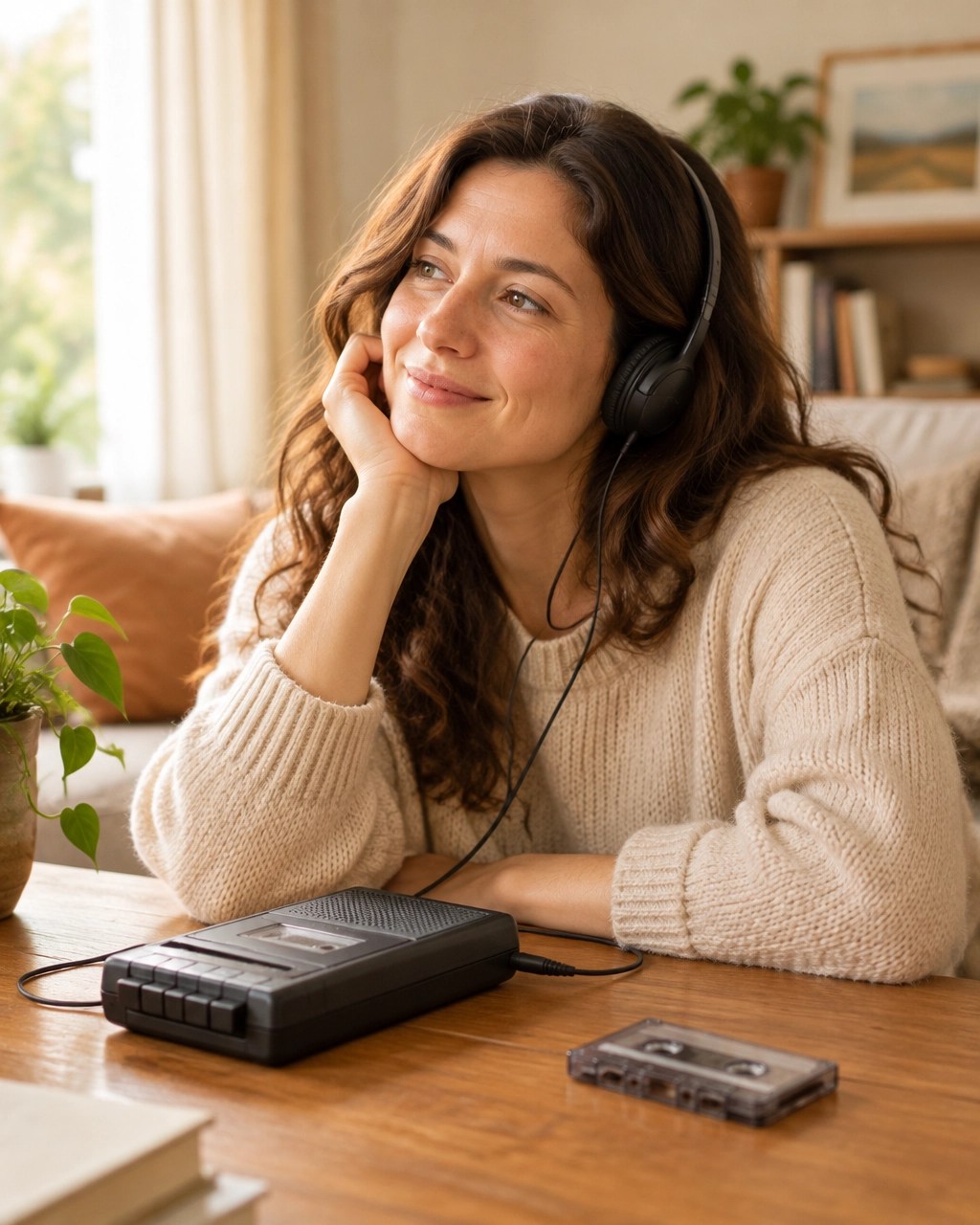
Preserving a small, irreplaceable performance
Bedroom recordings were rarely made with an audience in mind. They were experiments, games, practice, and messages created in the ordinary rhythm of childhood. That informality is exactly what makes them special. A child’s way of telling a story or arguing over who gets to speak next is a vivid part of family history, and one that a photograph cannot reproduce.
If you have cassettes with children’s stories, songs, skits, or messages, consider making them easier for your family to hear and share. Scan A Lot converts audio tapes into digital files and handles a range of family media. Learn more about our audio cassette to digital service, or contact Scan A Lot with questions about your recordings.
#AudioCassetteToDigital #AudioCassette #CassetteToDigital #AudioDigitization #AudioPreservation #FamilyHistory #FamilyMemories #ChildhoodMemories #ChildhoodVoices #FamilyVoices #PreserveYourMemories #MemoryPreservation #DigitalPreservation #HomeRecordings #VintageCassette #CassetteTapes #BedroomRadioShow #ChildhoodStories #KidsOnCassette #SiblingMemories #FamilyArchive #PersonalHistory #GenerationalMemories #LegacyPreservation #RecordedMemories #OldFamilyTapes #AudioTransfer #DigitizeAudio #AnalogMemories #MemoriesForTheFuture #FamilyKeepsakes #ScanALot #TipsAndTricks #Preservation