

Some family recordings hold a whole scene in just a few seconds: the quiet of a bedroom, a favorite book opened to a familiar page, and a grandparent’s voice beginning, “Once upon a time…”
A cassette recorded especially for a child could become part of the bedtime routine. Perhaps a grandparent lived far away, or a parent was working late or traveling. A tape made it possible to hear a familiar voice at the end of the day, reading a much-loved story, singing a lullaby, making up an adventure, or simply saying goodnight.
Years later, the child who listened to that cassette may be an adult with children of their own. Finding the tape can bring back more than the words of a story. It can bring back the pace, warmth, and small personal touches of the person who recorded it. Digitizing the cassette helps keep that voice available to listen to and share with another generation.
More than a story on tape
A bedtime recording is often personal in a way that a photograph cannot be. You can hear how someone pronounced a character’s name, where they paused for dramatic effect, or how their voice softened at the end of a long day. There may be a little laugh, a familiar phrase, or a gentle reminder to close your eyes.
Not every tape is a polished reading. Some recordings wander away from the printed story. A grandparent might add a detail about the child, invent a new ending, or pause to ask whether the listener is still awake. The tape might end with a lullaby or a message meant only for that child.
Those spontaneous moments are part of what makes the recording precious. The cassette preserves not just a performance, but a relationship: someone taking time to make a child feel close, comforted, and remembered.

When the cassette becomes a family discovery
A bedtime tape can resurface in a box of keepsakes, among old books, or while a family is sorting through belongings. Someone recognizes a name on the cassette, or remembers the player that used to sit beside the bed, and the family starts wondering what is on it.
The discovery can be especially moving when the person who recorded it is no longer nearby. But the recording’s meaning is not limited to loss or nostalgia. It can be a welcome way to reconnect with a person who is still part of everyday family life, even if distance, time, or changing circumstances make visits less frequent.
For adult grandchildren, hearing these recordings may also reveal something new about their own childhood. A voice that once felt like a regular part of bedtime can sound different years later. Details that were ordinary at the time (a familiar greeting, an affectionate nickname, the way someone read a passage) may now feel like a small window into family life.
Sharing the stories with children today
A digital copy makes the recording easier for family members to listen to on current devices, without needing to find a cassette player. It can also be shared with siblings, cousins, and the next generation. An adult who once listened to a grandparent’s story may now play it for their own child at bedtime.
The experience does not have to replace reading a new book together. It can be one more way to bring family history into a familiar routine: listen to a story, talk about who recorded it, and share what the person was like. Children may be curious about the voice, the old cassette, or the story that their parent remembers from childhood.
It can help to share a little context alongside the recording. A note with the speaker’s name, an approximate date, the child the tape was made for, or the story title helps future listeners understand what they are hearing. If the story was made up, that detail is worth keeping too. These small pieces of information can become part of the memory.
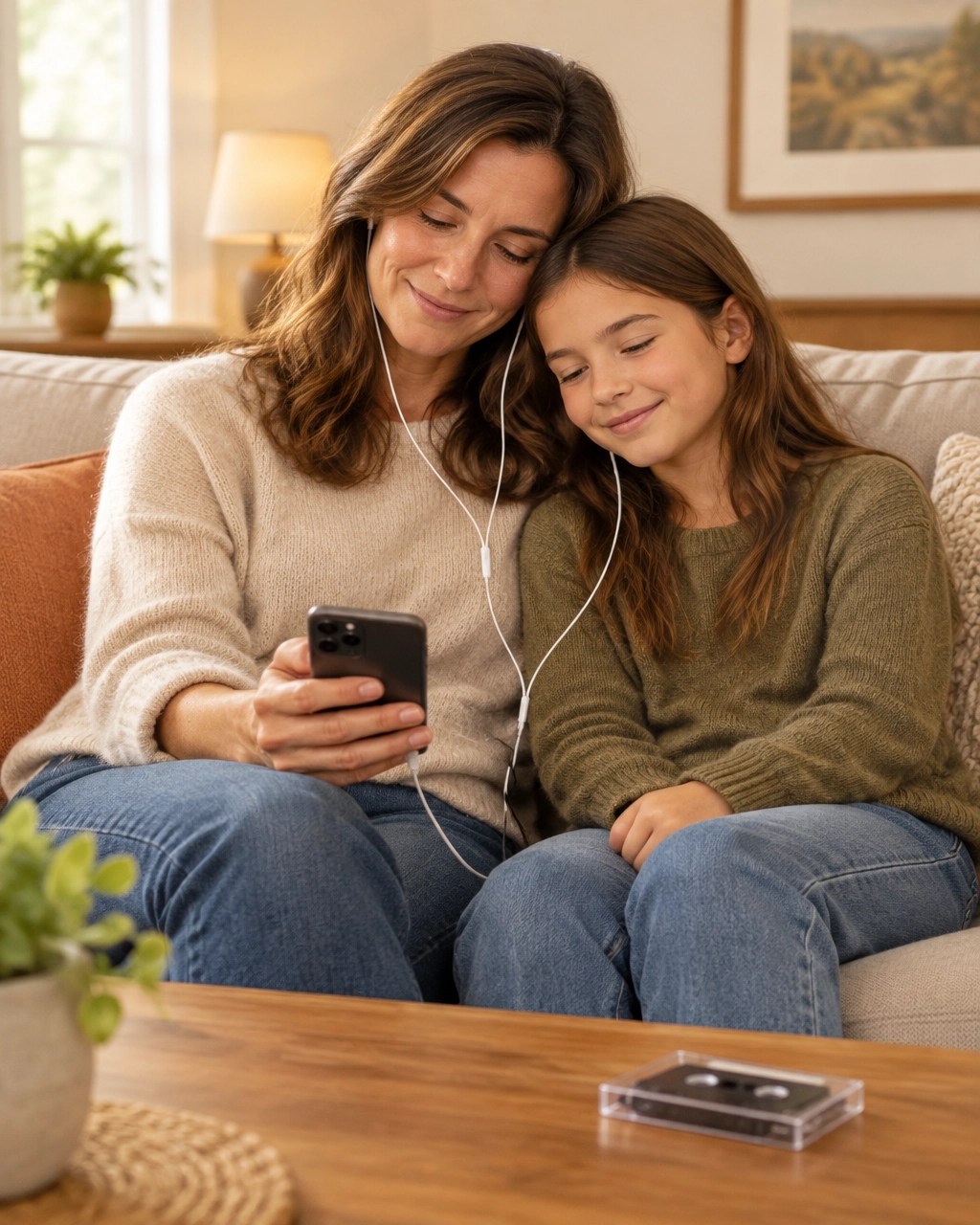
A digital copy helps keep the recording accessible
A cassette is a physical object, and listening to it depends on having equipment that can play it. A digital file makes the recording more convenient to access and share, while the original cassette can remain a valued family keepsake.
As with any older recording, the results depend on the tape and the recording itself. A digitized copy preserves what can be heard from the original; it cannot recreate words that were never captured or guarantee that every recording will sound the same as a modern studio recording. The purpose is to make the voice and story available in a format that works with today’s devices.
The Library of Congress’s recorded sound care guidance offers information on caring for sound recordings, including magnetic tape. For families considering a transfer, Scan A Lot’s audio cassette to digital service explains the audio formats it handles and the available digital file options.
A few thoughtful ways to preserve the story’s meaning
Once the recording is digitized, a little organization can help it stay meaningful and easy to find. Consider keeping the speaker’s name and the child’s name with the file, along with any details the family knows about when it was made. If the cassette contains several stories or messages, identifying them can make it easier to return to a favorite.
It may also be worth sharing a copy with other relatives who would treasure hearing it. Families can keep their own copies and choose a place to store them that is easy to remember. The original cassette can remain with the rest of the family’s keepsakes.
Most of all, make room to listen together. A recording that has been stored away for years may prompt a story from someone who remembers the night it was made, or help a child learn about a grandparent they never met. The voice is only part of the memory; the family stories around it matter, too.

Keep a familiar voice close for the next generation
A grandparent’s bedtime story tape is a small, personal piece of family history. It holds the sound of someone reading, singing, improvising, and offering a goodnight message to one particular child. When that child grows up and shares the recording with their own family, a private moment from years ago can become part of a new bedtime routine.
If you have a cassette of bedtime stories, lullabies, made-up adventures, or goodnight messages, contact Scan A Lot to have your audio cassettes digitized. A digital copy can help keep those stories and the voices behind them accessible to your family.
Categories: Tips & Tricks, Preservation
#AudioCassetteToDigital
#DigitizeAudio
#FamilyMemories
#BedtimeStories
#PreserveVoices
#GrandparentMemories
#GrandparentStories
#FamilyHistory
#FamilyLegacy
#PreserveFamilyHistory
#AudioPreservation
#CassetteTape
#CassetteDigitization
#AudioCassetteTransfer
#DigitalAudio
#VoiceRecordings
#RecordedMemories
#Lullabies
#GoodnightStories
#StoriesForChildren
#ReadAloud
#ChildhoodMemories
#MemoriesAcrossGenerations
#IntergenerationalMemories
#GenerationalStories
#GrandparentsAndGrandchildren
#FamilyKeepsakes
#PreserveThePast
#MemoryPreservation
#AnalogToDigital
#AudioTransfer
#DigitalPreservation
#FamilyStorytelling
#TreasuredVoices
#ScanALot
#MediaConversion