

Categories: Tips & Tricks, Preservation
A cassette marked “Spring Concert,” “Christmas program” or simply “Church, 1987” can hold more than a song. It may capture a family member stepping up to sing a solo, a school choir finding its harmony, or the applause that filled a community hall after a performance.
These recordings preserve a particular moment: the sound of a familiar voice at a younger age, the care put into a performance, and the people who gathered to hear it. For families revisiting old recordings, choosing an audio cassette to digital service can make those memories easier to listen to and share.

A performance is more than the music
A choir or recital tape often contains details that were never written down. There may be an introduction from a teacher, the shuffle of performers finding their places, a congregation joining in, or laughter and applause at the end. Even a pause between songs can bring back the feeling of being in the room.
That is part of what makes a recording personal. A relative’s solo might call to mind weeks of practice and the courage it took to perform. A school play may bring back the cast, costumes and classmates who shared the stage. A holiday cantata can connect one family’s traditions across several generations.
The sound is also a small historical record. It documents the songs people chose, the way local groups performed them, and the schools, churches and community organizations where they came together. Vassar College, for example, describes preserving hundreds of campus performances, including formal concerts, a cappella performances and student musical plays. The collection shows how recordings can contribute to a wider understanding of a community’s history, not only its musical life. Read about Vassar’s music preservation project.
Labels can offer helpful clues
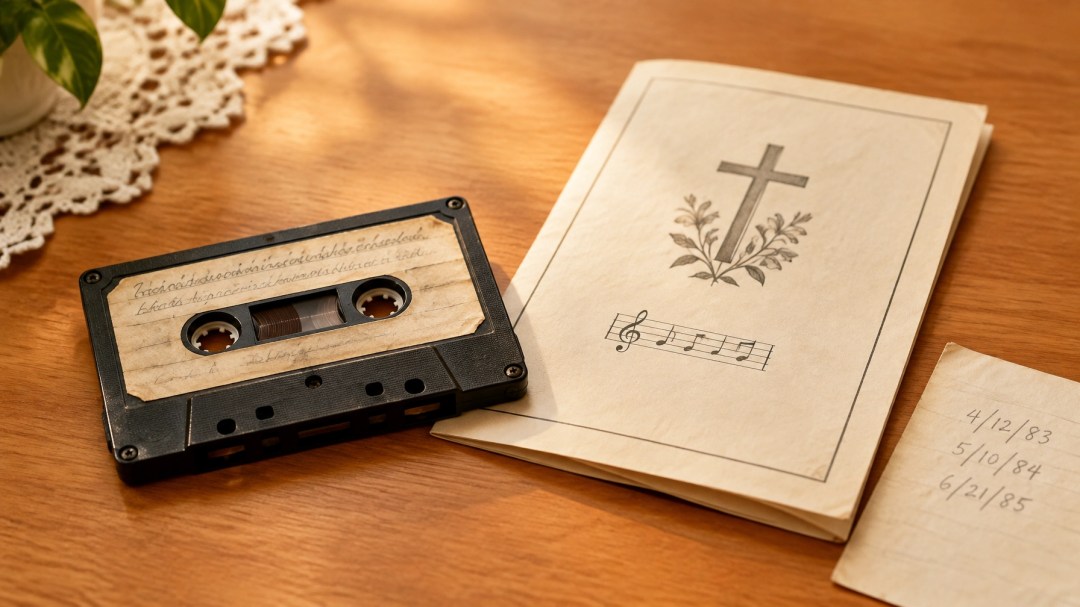
Cassette labels often provide a starting point: a place, a date, a choir name, or a note like “Christmas Eve.” Sometimes the handwriting is faint or the label gives only part of the story. That’s all right. Even a broad clue can help connect a tape to a particular year, venue or event.
Programs, photographs, yearbooks and family recollections can add context. A name on a program may identify a soloist; a date on the cassette may match a school reunion or a holiday gathering. If several tapes belong to the same period, their labels may help form a timeline.
You don’t need to have every detail figured out before seeking a transfer. Keeping any known information with the cassette (such as the names of performers, the likely event or the town) can help preserve the story alongside the sound. When possible, retain the original label and case with the tape so those clues stay connected.
Making recordings easier to revisit
A cassette can be meaningful and still be inconvenient to play. The right equipment may no longer be easy to find, and a digital file is simpler to listen to on many current devices. It can also be shared with relatives who live elsewhere, or played during a family gathering without passing around the original tape.
Digitization doesn’t change what happened in the room. It gives the recording a practical new form so that people can listen again. Families may choose to keep a full concert together, or simply enjoy being able to navigate to a favorite moment more easily. Either way, the original remains part of the keepsake, while the digital version offers another way to return to it.

What to expect from a professional transfer
A professional transfer involves playing the cassette and capturing its audio as a digital file. The result depends on what is present on the original recording: the condition of the tape, how it was recorded and the sound quality of the performance itself. Digitization can make a recording accessible; it cannot add details that were never captured.
Careful playback and appropriate, maintained equipment help provide a faithful transfer. A recording may include background hiss, uneven volume or the natural acoustics of the room. Those characteristics are part of its history, and a family may prefer to preserve the performance as it was rather than expect it to sound like a modern studio recording.
A tape’s condition can also affect what is possible. The Canadian Conservation Institute recommends assessing audio tapes before playback and notes that tapes with physical or chemical damage may need professional attention. If a cassette looks damaged or you’re unsure about its condition, it’s sensible to avoid unnecessary playback and ask a service experienced with audio tapes. Learn more about audio tape digitization and preservation.
Small details help keep the story with the sound
When you gather recordings for an audio cassette to digital project, a few simple pieces of context can be valuable:
- The people or group who performed
- The name of the event, school, church or organization
- An approximate date or season
- Any related program, photograph or family memory
These notes don’t need to be formal. “Aunt Maria’s solo at the winter concert” is meaningful information if it helps your family recognize what they’re hearing. Even an uncertain date or a question mark can be useful context to retain.
Once the audio is digitized, consider keeping more than one copy in separate locations and sharing files with family members who may value them. Preserve the cassette and its accompanying materials, too. The physical item, its handwritten label and the digital recording together tell a fuller story.
A voice remembered in its own time
A concert recording may not have been made with archival history in mind. It may have been recorded from the audience, with a relative holding the microphone or a family member saving the tape in a drawer afterward. But years later, those informal recordings can become the performances everyone wants to hear again.
The moment might be a child’s first solo, a parent singing with the church choir, or a friend’s turn in a neighborhood production. There is a special kind of connection in hearing a person’s voice from a particular time in their life, and hearing the applause from the people who were there.
Converting that cassette to a digital file helps make the recording easier to revisit and pass along, while keeping the original memory close.
If you have choir concerts, school plays, church programs, recitals or community performances on cassette, contact Scan A Lot, LLC to discuss an audio cassette to digital transfer. We’ll be glad to help you take the next step in preserving those voices and the stories they carry.
#AudioCassetteToDigital #CassetteToDigital #AudioCassetteTransfer #AudioDigitization #AudioPreservation #SoundPreservation #FamilyHistory #FamilyMemories #FamilyArchive #CommunityHistory #LocalHistory #ChoirConcert #ChurchChoir #SchoolChoir #CommunityChoir #SchoolPlay #ChurchProgram #HolidayCantata #SpringConcert #RecitalRecording #CommunityPerformance #LivePerformance #FamilyLegacy #PreserveYourMemories #MemoriesInSound #VoicesOfThePast #AnalogToDigital #DigitalPreservation #CassetteMemories #PerformanceHistory #ScanALot #MediaConversion #TipsAndTricks #Preservation #ShareFamilyHistory #GenerationalMemories #FamilyKeepsakes #AudioMemories #RecordedHistory #CherishedVoices