

Categories: Tips & Tricks, Preservation
A conversation does not always need to be carried by words. When someone living with Alzheimer’s disease or another form of dementia finds conversation tiring or difficult, a familiar photograph can offer another way to connect: a face to look at, a place to notice, or a moment to share.
A photo may prompt a laugh, a smile, a gesture, or a few words. Sometimes there is no obvious response at all, and simply looking together can still make for a meaningful visit. The point is not to test what someone remembers. It is to share something personal, at their pace.
That is one reason families find new value in the printed photos tucked into albums and boxes. And when those photos are scanned, digital copies make it easier to bring favorite images into everyday moments of care.
A familiar picture can make room for connection
A photograph gives everyone something to focus on together. Instead of searching for the next question or carrying a conversation alone, you can sit side by side and look at one image.
It might be a snapshot of a family picnic, a beloved pet, a first home, a favorite garden, or a familiar face. You could simply say, “Here’s a photo from the beach,” or share what you notice about it. If your loved one responds, follow their interest. If they don’t, there is no need to press for an answer or move quickly to another question.
The Alzheimer’s Association’s guidance on reminiscence describes photos and other familiar prompts as ways to encourage connection. Responses will vary from person to person and from day to day. A photograph is not a memory test, and it does not have to lead to a clear story to be worth sharing.

Digital copies make familiar photos easier to bring along
Original prints are precious, but they can be stored away in albums, boxes, or a family member’s home. Digital copies make it simpler to share the same favorite images in different ways, while keeping the original photographs in the family’s care.
For one visit, a few printed copies might become a small bedside album. The next time, a family member could bring up a photo on a phone or tablet. A sibling who lives farther away can receive the same digital collection and choose a picture to talk about during a visit or video call.
These small options help a collection become part of ordinary routines. A photo can be close at hand during a quiet afternoon, included in a visit, or shared among relatives who want to bring a familiar memory into the room.
Shared photos can help visits feel less like searching for words
Families sometimes worry about what to say when conversation slows. Having a few photos available can take some pressure off. You can look together, point out a detail, or share a small story of your own without expecting your loved one to recall every name or date.
A picture of a family pet might lead to a laugh or a comment about animals. A holiday photo may invite a shared smile, even if no one talks through the whole event. And if the image doesn’t seem to connect that day, it is fine to set it aside and simply enjoy one another’s company.
When digital copies are shared among siblings, everyone can draw from the same pool of family images. That can make it easier to find a photo that feels familiar and to bring different stories and perspectives into visits, without making the person at the center of them feel quizzed.

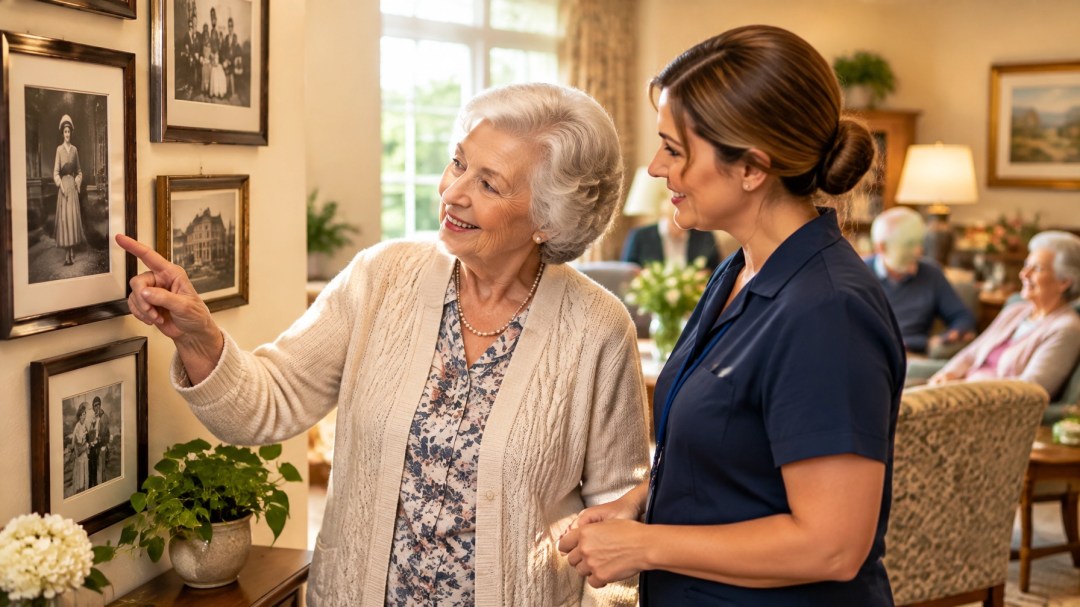
A photo wall can offer a familiar point of focus
In some care communities, a small display of personal photographs can make a shared space feel more individual and welcoming. A photo wall might show family, favorite places, pets, or meaningful activities. For someone who prefers looking over talking, the pictures can offer a comfortable point of focus, and a natural opening for a visitor or staff member to sit and connect.
The best approach is personal. Choose images that feel welcome and familiar to the individual, and pay attention to their reactions. Some photographs may be especially enjoyable; others may not suit the moment. A family can adjust what is displayed over time, with the person’s comfort and preferences in mind.
A photo display is not a substitute for conversation or care. It is simply another way to bring personal history into the environment and give a visit a gentle place to begin.
Preserve the prints, share the moments
Printed photographs carry their own presence: their size, texture, handwriting, and the small marks of being handled over the years. Digital copies offer a practical way to make those images easier to use and share, while the originals remain part of the family collection.
Professional photo scanning turns printed photographs into digital files that can be viewed and shared with relatives. Scan A Lot handles the conversion, so families can focus on choosing how they would like to enjoy the images: as a small printed album, a shared collection among siblings, or photographs ready to view on a screen.
Families searching for digitization near me can learn more about Scan A Lot’s services and how to get in touch.
A digital copy cannot guarantee a particular response, and no photograph needs to produce a story to matter. The value may be in a familiar face, a shared glance, a quiet pause, or a moment of laughter. When words are hard to find, a photograph can offer another way to be together.
For more communication ideas, the Alzheimer’s Society’s guidance on communicating with a person with dementia offers practical, person-centered suggestions.
#PhotoScanning #DigitizationNearMe #MemoryCare #DementiaCare #AlzheimersCare #FamilyPhotos #PhotoPreservation #DigitalPhotoCollection #FamilyMemories #Reminiscence #MemorySupport #CaregiverSupport #PreserveMemories #ScanALot #TipsAndTricks #Preservation